

Can a smart payments strategy turn regulatory oversight into a competitive edge?
This guide explains merchant accounts and why certain firms need specialised accounts for card and online payments. A high risk business banking singapore account supports firms that face more chargebacks or fraud. These accounts often carry higher fees and stricter terms than standard options.
We separate everyday banking from payment acceptance needs like merchant accounts and gateways. The aim is practical: founders, finance teams and compliance leads will find clear steps to keep revenue moving with reliable payment solutions and compliant processes.
Expect a concise preview of classification triggers, available products, MAS expectations for onboarding, and how to keep accounts in good standing. You will also see how proactive risk management can be a growth advantage for fast-scaling or cross-border models in a digitally mature payments market.
Key Takeaways
- Merchant accounts enable card and online payments under stricter terms.
- Classification affects fees, monitoring and reserve requirements.
- Providers use different names, but risk controls follow consistent patterns.
- Mearures aligned with MAS shape onboarding and ongoing checks.
- Proactive risk management can protect revenue and support growth.
Understanding high-risk business banking and why it matters in Singapore
Not every firm with steady revenue gets the same treatment from payment processors and financial institutions.
“High-risk” classification covers two linked areas: the business account relationship with banks and the merchant acquiring path for card acceptance. A company can be financially healthy yet still attract stricter checks because of chargeback history, fraud signals or its sector.
What “high risk” means for accounts, payments and approvals
Transaction approvals, limits and holds are shaped by dispute exposure, cross-border patterns and regulatory scrutiny — not only by turnover. Providers use monitoring, thresholds and reserves to manage sudden spikes.
Why Singapore’s cashless preference matters
With POS use showing 36% credit cards, 21% debit cards and 18% e-wallets, payment reliability is mission-critical for conversion and retention. If customers expect fast, seamless checkout, outages or extra friction damage sales.
- Expect stricter onboarding and ongoing checks from banks and processors.
- Understand the chain: merchant → processor → acquirer/ institution — each may pause activity.
- Prepare documentation to reduce friction and improve approval odds.
Characteristics that trigger a high-risk classification by banks and financial institutions
Providers evaluate accounts using observable signals rather than intuition. This helps teams self-assess before applying and reduces surprises during onboarding.

Chargebacks, refunds and card-not-present fraud
Frequent chargebacks and refund-heavy models cause direct losses and network penalties. Acquirers may restrict credit access or raise fees when dispute rates climb.
Card-not-present commerce expands fraud exposure, increases manual review and leads to stricter transaction thresholds.
International sales and multi-currency flows
Cross-border activity and multiple currencies add jurisdictional complexity. These patterns raise screening demands and tend to show higher dispute rates.
Ticket size, volatile volumes and recurring billing
Large single transactions or sudden volume spikes can look like fraud or compromised channels. Subscription models bring “friendly fraud” and descriptor confusion that boost disputes.
New companies and regulatory pressure
New firms with limited processing history face deeper paperwork and a heavier emphasis on risk assessment. Providers also expect clear compliance controls to counter laundering and money laundering concerns.
Common high-risk industries and sectors operating in the Singapore market
Many sectors face extra scrutiny from banks and processors because of their product type, sales pattern or regulatory status. This map helps operators in the Singapore market spot where friction typically arises.
Gambling, casinos and regulated platforms
Licensing and responsible-gaming controls matter. These platforms draw checks for payouts, player protection and dispute volumes.
Adult and age-restricted services
Age verification and reputational sensitivity make descriptors and proof-of-age vital. Unclear billing often increases chargebacks.
Travel and tourism
Cancellations, delays and third‑party suppliers create refund pressure. Volatile fulfilment leads to more disputes during external shocks.
Pharmaceuticals and nutraceuticals
Advertising claims invite compliance checks. Delivery or efficacy complaints raise scrutiny from acquirers and regulators.
E-commerce, tobacco, telecoms and crypto
Certain retail categories such as electronics and jewellery face elevated fraud and returns. Tobacco and vaping see shifting rules that affect acceptance.
Telemarketing and telecommunications depend on strong documentation to counter complaint-driven disputes. Cryptocurrency platforms pose volatility and policy-change challenges for fund flows and credit assessment.
Financial services
Lending, debt collection and credit repair require strict conduct standards and heavy compliance. Providers expect clear records and consumer-dispute handling.
- Quick takeaway: identify your sector, tighten descriptors, document decisions and prepare compliance evidence to reduce onboarding friction and operational risks.
high risk business banking singapore: account options, services, and what to expect
Choosing the right account mix shapes cash flow, compliance needs and customer checkout experience.
Business bank accounts hold and move money, while merchant accounts and gateways accept card and online payments. Keep these roles separate when planning operations.
Typical service components include acquiring, a gateway, fraud tooling, payout schedules, dispute handling and reporting. These pieces must integrate with accounting and reconciliation workflows.

Settlement timelines, reserves and funds availability
Settlement can be slower for higher-risk profiles. Providers may extend payout windows to allow for dispute resolution.
Rolling reserves hold a percentage of daily takings for a set period to cover chargebacks. This reduces available funds and tightens working capital.
Pricing, terms and ongoing monitoring
Fees are usually higher: per-transaction charges, setup or monthly fees and compliance-related costs. Banks and providers adjust terms over time.
Performance improvements may reduce monitoring. Conversely, spikes in disputes can trigger volume caps, holds or enhanced reviews.
Decision framework
- Match account types to sales channels: in-person, e‑commerce or recurring billing.
- Choose providers that support needed payment methods and multi-currency flows.
- Plan cash buffers to offset rolling reserves and longer settlements.
| Account Type | Primary Use | Settlement | Typical Costs |
|---|---|---|---|
| Business bank account | Hold money, transfers, payroll | Immediate to T+1 for transfers | Standard account fees |
| Merchant account | Accept cards and online payments | T+3 to T+14; longer for higher exposure | Transaction fees, reserves |
| Payment gateway | Authorisation, routing, fraud checks | Depends on acquirer schedule | Monthly and per-transaction fees |
Benefits and trade-offs of high-risk accounts for businesses and customers
Access to card networks can unlock new customers and revenue channels even when standard providers decline service.
Market access and smoother checkout — Specialist merchant accounts let merchants accept cards and reach more customers. A cleaner checkout lowers abandonment and supports repeat purchasing in a digitally-first market.
Global sales and multi-currency support
Multi-currency processing helps exporters and platforms sell abroad without creating local entities. Localised pricing and clearer descriptors improve conversion for international customers.
Security tools and fraud reduction
Built-in security — providers bundle 3D Secure, adaptive scoring and chargeback monitoring. These tools reduce fraud and make operations more resilient rather than serving as mere compliance boxes.
“Specialist solutions often trade higher fees for predictable, scalable acceptance across borders and channels.”
Costs, terms and reputational effects
Trade-offs include higher fees, rolling reserves and longer settlement windows. These factors affect cash flow and pricing strategy.
Being labelled by a bank does not imply wrongdoing, but it can affect partner comfort. Evaluate reputational effects alongside revenue upside.
| Benefit | What it enables | Typical trade-off |
|---|---|---|
| Card acceptance | Broader customer reach and lower checkout friction | Higher transaction fees |
| Multi-currency | Sales growth in overseas markets | FX costs and reconciliation effort |
| Security & fraud tools | Fewer chargebacks and better protection | Monthly tool fees and integration work |
Quantify decisions: weigh conversion uplift and new market sales against reserves, fees and operational costs. For a practical primer on account types and supplier expectations, review specialist merchant accounts.
Qualification and onboarding: passing bank due diligence, risk assessment, and compliance checks
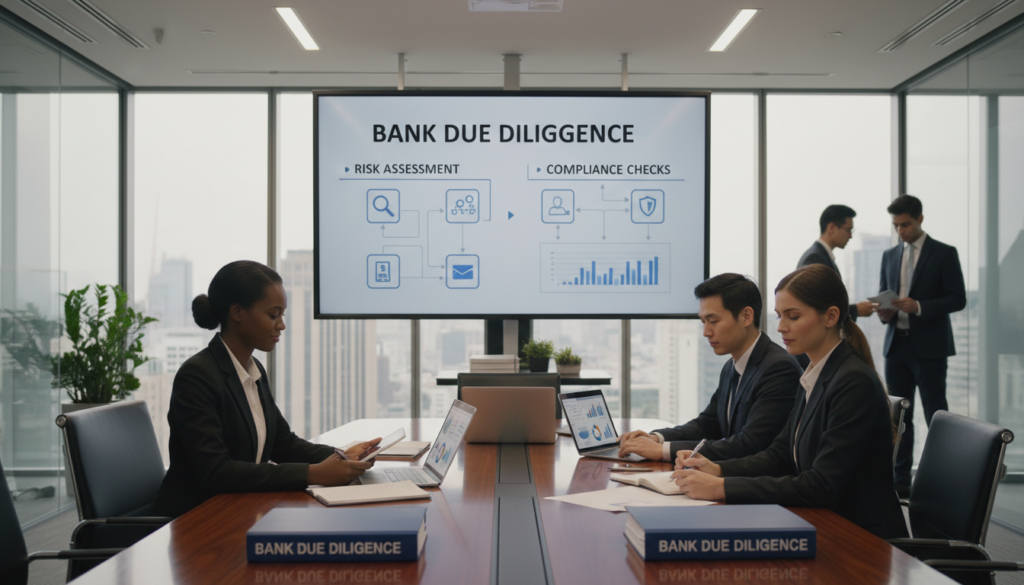
A smooth onboarding process depends on prepared documents and demonstrable controls, not just turnover figures. Providers run an enhanced due diligence process that tests governance, operational resilience and technical safeguards.
What enhanced due diligence looks like
Enhanced due diligence means deeper checks on licences, corporate filings and processing history. A complete pack reduces back-and-forth and shortens review timelines.
Essential documentation checklist
- Licences and authorisations, and corporate filings.
- Bank statements and audited financial statements.
- Processing logs, chargeback history and sales evidence.
- Clear product, fulfilment and service information.
Operational resilience and chargeback management
Show SLAs, customer support coverage, refund workflows and supplier redundancy. These prove the company can sustain operations during disruptions.
A credible chargeback plan includes policies, proof of delivery, service logs and an assigned owner for dispute management. Transparency matters: misrepresentation can lead to withheld settlements or termination.
PCI DSS and data security
PCI DSS alignment is expected if you handle card data. Practical steps such as tokenisation or hosted payment pages reduce scope and lower security burden for merchants.
Meeting MAS expectations: AML/CFT controls and Source of Wealth due diligence for higher-risk profiles
Effective anti-money laundering controls start with clear proof of where funds and wealth originate.
Why MAS-aligned checks matter. Financial institutions require robust AML/CFT measures to reduce money laundering and terrorism financing exposure. Demonstrating controls keeps account access and payment flows stable.
Source of Wealth vs Source of Funds. Source of Wealth explains how a person or owner accrued their wealth — for example, inheritance, sale of a company, or income from employment. Source of Funds shows the immediate origin of a payment, such as a salary transfer or investment return. Each needs its own supporting documents.
Risk-based, tiered controls
Apply the “same risk, same control” principle. Controls should scale with the assessed risk level, not the sector label.
Ongoing monitoring and governance
Periodic reviews, trigger-event checks and transaction-pattern monitoring detect profile changes. Escalation thresholds and senior management oversight make decisions defensible.
| Area | Evidence | Control |
|---|---|---|
| Source of Wealth | Sale agreements, tax returns, employment income | Document verification, enhanced review |
| Source of Funds | Bank transfers, invoices, payout receipts | Transaction tracing, payment screening |
| Complex cases | Trust deeds, multi‑jurisdiction structures | Third‑party validation, senior approval |
Practical tips. Keep structures simple, retain clear records, and prepare narratives for long-dated wealth or illiquid assets. Early preparation reduces follow-ups and supports smoother compliance outcomes.
Choosing the right provider in Singapore: banks, gateways, and specialist payment processors
Selecting the right payments partner affects conversion, cash flow and compliance across every sales channel. Start with a clear map of who does what: banks hold settlements, gateways handle authorisation, and specialist processors manage fraud, wallets and global routing.

Must-have coverage and local wallets
Prioritise cards and e‑wallets. With credit cards at 36%, debit at 21% and e‑wallets at 18% of POS usage, local wallets such as eNETS, DBS PayLah and GrabPay materially lift conversion for domestic customers.
Security and scam resilience
Cybercrime rose 25.2% YoY; choose partners with layered security measures, continuous monitoring and clear incident reporting. Ask for penetration test results and fraud‑monitoring dashboards.
Evaluation and compatibility
Demand transparency: full fee schedules, reserve policies, settlement timing, chargeback programmes and termination clauses. Test APIs, plugins, recurring billing and exportable data reports to ensure your finance team and platform integrate cleanly.
- Operational service: dispute response times and escalation paths.
- Contract flexibility: notice periods and fee change rules.
- Local options: enable eNETS and wallets where they improve checkout rates.
| Provider type | Primary role | When to pick |
|---|---|---|
| Banks | Settlement & accounts | When you need direct payouts and treasury links |
| Gateways | Authorisation & routing | When you want broad card and wallet coverage |
| Specialist processors | Fraud tooling & cross-border routing | When growth or chargeback exposure requires advanced controls |
Operational strategies to reduce risk, protect funds, and keep accounts in good standing
Consistent, automated controls cut losses, speed settlements and protect available funds. Build simple processes that run daily and make monitoring routine rather than ad hoc.
Fraud prevention stack
Layered checks stop most unauthorised attempts before they reach your ledger. Use 3D Secure for authentication, AVS and CVV for card verification, and device/IP signals to detect unusual access.
Combine those with adaptive scoring that learns your sales patterns. That reduces false declines and keeps legitimate customers flowing.
Chargeback prevention and representment workflows
Respond fast. Offer pre-dispute alerts where available and triage refund requests within 24–48 hours.
Keep a representment kit ready: order logs, delivery proof, identity checks and clear communication trails. Well‑prepared evidence improves dispute outcomes.
Transaction monitoring and anomaly detection
Set thresholds for velocity, ticket size and geography. Alert on repeat attempts and sudden volume spikes.
Automated rules and daily reviews make transaction surveillance an always-on discipline rather than a monthly chore.
Customer communication and billing clarity
Use transparent descriptors and send renewal or shipment notices before card statements post. Clear messaging prevents friendly fraud and reduces disputes.
Record-keeping, reporting and audit-ready data
Store order receipts, verification outputs and correspondence in one searchable store. Regular report exports keep teams ready for reviews.
Managing reserves and cash flow
Forecast potential holds and maintain a buffer for payroll and supplier payments. Align money movement to realistic settlement timing.
Prove control performance to providers: consistent results can win better terms, lower reserves and faster payouts over time.
Conclusion
, Prepared teams that map flows and keep records reduce review time and improve payout stability.
Clear documentation, ongoing monitoring and proportionate compliance make access to specialist accounts manageable for most business models.
Follow a simple decision path: identify classification drivers, select suitable accounts and services, then embed daily controls that satisfy financial institutions and protect cash flow.
Treat chargebacks, fraud and monitoring as board-level operational matters. For sectors such as financial services, real estate, asset or estate payments, expect deeper diligence and be ready to explain source of wealth.
What to do next: compile documents, map transaction flows, formalise dispute procedures and confirm PCI DSS posture. The aim is sustainable acceptance—stable settlements, fewer holds and predictable growth driven by clear information and steady compliance.
FAQ
What does "high-risk" mean for company accounts, payments and transaction approvals?
Why does Singapore’s move towards cashless payments matter for vulnerable sectors?
Which behaviours or transaction patterns typically trigger a high-risk flag with banks?
What industries in Singapore commonly face tougher onboarding and monitoring?
How do business bank accounts, merchant accounts and payment gateways differ for these clients?
What operational measures can reduce the chance of account suspension or reserve holds?
What documents and evidence improve approval prospects during onboarding?
How do regulators such as the Monetary Authority of Singapore influence due diligence?
What is the difference between Source of Wealth and Source of Funds?
How do rolling reserves and settlement timelines affect cash flow?
Can specialist payment processors offer better outcomes than traditional banks?
What security and compliance standards should firms meet to keep accounts stable?
How should companies approach chargeback prevention and representment?
What practical challenges do complex ownership structures and illiquid assets pose?
Which local payment methods should providers support for the Singapore market?

Dean Cheong is a Singapore-based B2B growth strategist and the CEO of VOffice. He helps companies scale revenue through sharper sales execution, CRM implementation, and go-to-market strategy, backed by a strong foundation in business banking and finance from Nanyang Technological University and a track record of driving sustainable, performance-led growth.