
Can a clear model keep your teams productive and well at the same time?
This guide defines what a practical remote work structure singapore business looks like for employers and company leaders. It separates remote work, hybrid and flexible work arrangements so managers can align policy and practice. The aim is a step‑by‑step framework covering policy design, compliance, tech and culture.
Flexibility is no longer optional in a tight talent market. Employment Hero’s report shows 88% of knowledge staff want at least one day away from the office. That preference makes a solid model a retention and attraction lever for the workforce.
This guide suits SMEs, scaling tech firms, finance teams and regional HQs. By the end you will have a chosen model, a workable policy, a Singapore compliance checklist, an enabling tool stack and a management cadence that supports high‑performing teams.
Key Takeaways
- Define terms: distinguish remote, hybrid and flexible arrangements for clarity.
- Follow a framework: policy, legal checks, tech and culture are all required.
- Use data: preference signals make flexibility a strategic lever for retention.
- Design for balance: protect productivity and employee wellbeing together.
- Build outputs: model, policy, checklist, tool stack and management rhythm.
- Apply measurables: set outcomes and communication norms, not just permissions.
The current state of remote and hybrid work in Singapore
Since 2019, patterns for where and when people do their jobs have shifted sharply across industries.
Evolution 2019→2024: full remote rose from under 5% to roughly 15–20%. Hybrid moved from 10–15% to become common at 40–50%. Fully on‑site roles fell from 80–85% to about 30–40%. Flexible arrangements grew from 5–10% to around 50–60%.

Many employers kept hybrid because productivity and operating design showed teams can deliver outside the traditional workplace. Where knowledge tasks dominate, firms preserved part‑time absence from the office to protect output and morale.
Flexible schedules have real labour market effects. Residents outside the labour force for caregiving dropped from 23.8% to 21.5% in 2024, indicating that options for different hours and locations help people rejoin employment.
The December 2024 hiring outlook — 46% of companies expecting to add staff — suggests a tight market. Employers that offer remote‑friendly arrangements can widen talent pools and shorten time‑to‑fill, a clear competitiveness edge.
For employees, expectations changed: more say they want to spend part of the week away from the office. Working from home is now a baseline option for many roles rather than an exception.
Office implications: decisions about office space should follow actual utilisation and collaboration needs, not trends alone. Footprints are being refined to support meetings, focus time and teams that benefit most from co‑location.
What this means next
Because hybrid is mainstream, the real differentiator is not whether you allow it, but how consistently you apply it across teams and roles. Use clear policy, consistent practice and measured outcomes when choosing a model.
Read employers’ preferences and technology adoption trends in this industry update: employers drive higher GenAI adoption and value flexible.
Defining the right remote work structure singapore business model
Choosing the right operating model sets how teams coordinate, hire and deliver outcomes.
Three practical models help leaders match role realities to working arrangements rather than using a one‑size‑fits‑all policy.
Remote‑first model
Remote work is the default and the office is optional for planned gatherings. Success relies on clear documentation, strong written communication and deliberate use of collaboration tools.
Office‑first hybrid
Employees are primarily office-based with set remote days. This suits collaboration-heavy teams where real-time iteration, workshops and client sessions matter most.
Flexible hybrid
People choose where they work based on tasks and preference. Without eligibility rules, guardrails and manager training this model can create inconsistency across teams.

| Model | Best for | Key enablers | Risk to manage |
|---|---|---|---|
| Remote‑first | Distributed knowledge teams | Async processes, docs, collaboration tools | Onboarding intensity; culture drift |
| Office‑first hybrid | Collaboration‑heavy groups | Scheduled co‑location, workshop rooms | Space costs; less geographic reach |
| Flexible hybrid | Task‑driven and mixed roles | Eligibility rules, manager training | Perceived unfairness; inconsistency |
Use a short decision framework: role type, customer or security constraints, need for synchronous collaboration, onboarding demands and maturity of performance measurement.
Practical tip: set a company baseline (minimum standards) and allow team‑level add‑ons. This prevents ad‑hoc arrangements that feel unfair to employees.
Once you pick a model, translate it into clear work arrangements, communication norms and support provisions so the chosen approach works day‑to‑day. For a guided checklist on picking a model, see choosing the right work model.
Building a remote work policy that actually works
Good policy translates intentions into predictable, fair arrangements for employees.
Start with eligibility and clear approval paths. Define which roles qualify, the approval workflow and review cycles. Make exceptions formal so managers cannot create informal favours.
Core hours versus flexible time
Set core hours to enable meetings and overlap. Specify response-time expectations and protected slots for deep focus.
Allow flexible time outside those windows so employees can manage personal responsibilities. Document meeting windows and default meeting lengths.
Communication norms
Be explicit about when to use video for high-context topics and when messaging or async updates suffice. Require agendas, decision logs and short written follow-ups.
Limit after-hours pings and set default do-not-disturb rules to protect health and recharge.
Home office and equipment support
Offer stipends or allowances for monitors, chairs, keyboards and headsets. Publish minimum ergonomic standards and an easy request process for additional support.
Documenting processes
Create SOPs, shared checklists and a single source of truth for team processes. Provide an internal FAQ and a manager toolkit so employees get consistent answers about working home, expenses and performance.
- Measure success: track productivity, engagement and retention and schedule policy reviews.
- Keep it enforceable: translate chosen work arrangements into clear steps that managers follow.
Singapore legal and compliance essentials for remote working
Clear compliance rules protect employers and employee rights as flexible arrangements become common. This section summarises key legal obligations and practical steps to keep your policy aligned with law.
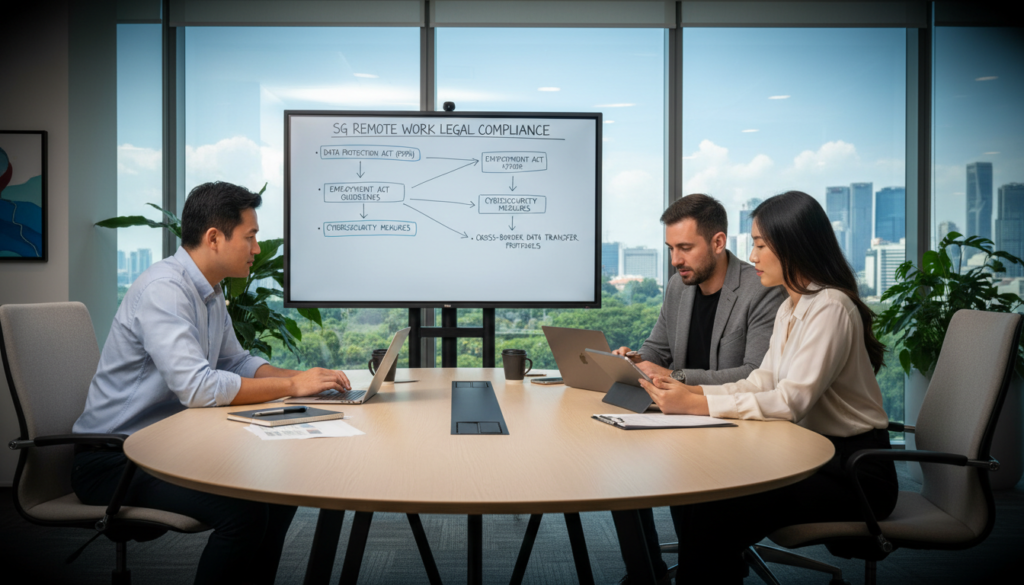
Tripartite Guidelines on Flexible Work Arrangement Requests
The Tripartite Guidelines effective 1 December 2024 require employers to receive, assess and respond to flexible work arrangements consistently.
Set a formal request channel, objective assessment criteria and written responses. Keep dated records to reduce disputes and show consistent treatment of employee requests.
MOM‑aligned duty of care: health and safety
Translate duty of care into simple actions: risk assessments, ergonomic guidance and an incident reporting process.
Provide minimum standards for both home and office space, and share checklists so staff know expectations for the workplace and working home setups.
CPF and work pass rules
CPF contributions are required for Singapore Citizens and Permanent Residents regardless of performing tasks from home.
For foreign nationals, an appropriate work pass is needed when the person is based in the country. If the worker is abroad, local tax and employment laws may apply — clarify mobility in policy.
PDPA, privacy and security
Protect personal data with device controls, MFA and limits on local downloads. Minimise recordings and require secure storage for client or regulated data.
Quote:
“Data handling rules must cover where information is accessed and how it is retained.”
Policy clauses and a minimum checklist
Include approved work locations, rules for reporting overseas activity, confidentiality obligations and non‑intrusive monitoring measures.
- Documented request and response steps for flexible arrangements.
- Health and ergonomic assessment completed before approval.
- Confirmation of CPF treatment and work pass status.
- Security checklist: MFA, device controls, data access limits.
Practical tip: require managers to use the checklist before approving any arrangement that touches client data or crosses borders. This keeps employment risk visible and manageable.
Technology and collaboration tools to support distributed teams
An intentional tech stack is the difference between chaotic coordination and smooth team delivery. Choose solutions that map to clear processes so teams spend less time chasing updates and more time on priority activities.

Video and communication
Use Zoom or Microsoft Teams for high-bandwidth, decision-heavy conversations. Reserve video for kickoff meetings, reviews and sensitive gesprekken.
Adopt Slack-style messaging for async updates. Define channel rules, naming conventions and a default response SLAs so communication stays tidy.
Project and task visibility
Deploy Asana, Trello or a ClickUp-style board to track tasks, owners and deadlines. Visible boards reduce ad-hoc pings and create clear accountability for team activities.
Pair boards with short decision logs and a single source of truth for processes in Google Drive. Standardise folder structure and file names to prevent information scatter.
HR, payroll and security basics
HR systems such as Employment Hero or Payboy handle leave, time & attendance, claims and payroll for hybrid arrangements and provide necessary audit trails.
Security essentials include VPN rules, device controls, encryption and multi-factor authentication. Apply least-privilege access and enforce endpoint management to protect sensitive data.
“Select tools that integrate, support PDPA compliance and scale as teams grow.”
- Selection criteria: PDPA readiness, admin controls, local payroll features, integration capability and scalability.
- Adoption plan: pilot groups, training, a ‘how we work’ playbook and continuous optimisation to keep tools helpful, not burdensome.
Remote management and performance: focusing on outcomes, not hours
Good management shifts the conversation from hours logged to outcomes delivered.
Define success by outputs, quality and customer impact instead of visible busyness. Use clear deliverables that describe what “good” looks like, plus acceptable timelines and quality thresholds.
Setting measurable goals with OKRs
Adopt OKRs at company, team and individual levels to align priorities. Make key results quantitative and outcome‑oriented — for example, increase customer retention by 8% or reduce support response time to under 2 hours.
Performance check‑ins and fair appraisals
Use a light cadence: weekly one‑to‑ones for blockers, monthly development talks and quarterly reviews for appraisal. Keep notes and evidence to support fair comparisons across locations.
Monitoring productivity without eroding trust
Prefer visible WIP via task boards and agreed status updates rather than invasive tracking. Set service levels and response SLAs so expectations are clear.
| Area | Practical steps | Benefit |
|---|---|---|
| Goals | Company OKRs → team OKRs → individual KRs | Aligned priorities and measurable outcomes |
| Check‑ins | Weekly 1:1s, monthly coaching, quarterly reviews | Early support and fair appraisal |
| Bias mitigation | Calibration panels, shared evidence, blind scoring | Fair treatment for office and non‑office employees |
Manager behaviours matter: set expectations, give timely feedback, recognise wins and make consistent decisions. When performance slips, apply a documented improvement plan with clear milestones and coaching.
“Focus on output over hours; trust is the foundation for sustained team performance.”
Hiring and onboarding for a remote-first or hybrid workforce
Hiring for distributed teams demands clarity about location, hours and expected outputs from the first line of a job advert.
Writing clear job descriptions
State the chosen model (remote-first or hybrid), expected office days and core hour windows. Say if the role can be performed outside Singapore and note any time-zone limits.
Be transparent about pay. Reference local benchmarks — median gross monthly income was $5,500 in 2024 — and explain any location-based adjustments.
Interviewing and assessment
Use structured video interviews, work-sample tasks and asynchronous written exercises. Score candidates with rubrics to reduce bias and test real working behaviours.
Ask targeted questions on self-management, communication, security awareness and boundary-setting so you vet the right behaviours for successful remote working.
Onboarding that sticks
Ship equipment before day one and deliver secure access credentials. Assign a buddy, schedule early introductions and plan measurable early wins.
Design onboarding as a blended digital programme — 40.7% of structured training is already online — with clear checklists and timelines so the new employee gets fast, consistent support.
“Confirm eligibility and work pass requirements for Singapore‑based foreign employees and handle candidate data in a PDPA‑aware way.”
Culture, connection, and employee wellbeing in remote work
Strong culture must be intentionally designed so teams stay connected without sacrificing deep focus.
Preventing isolation while protecting deep time
Design structured touchpoints: weekly team check-ins, peer pairing and interest groups that create human connection.
Protect deep time by scheduling meeting‑free blocks and using async updates so employees can deliver focused work without constant interruption.
Reducing virtual overload and after‑hours fatigue
Limit recurring calls, set explicit response norms and declare core meeting windows. These simple rules cut needless meetings and reduce screen fatigue.
Employment Hero data shows 94% of hybrid workers report stress and 90% work outside normal hours weekly. Use workload planning, manager training on burnout signals and encourage leave to counter this trend.
Inclusive practices for caregivers and distributed teams
Make flexibility real by allowing staggered hours, part‑day schedules and clear eligibility for carers. Labour Force trends show flexibility helps caregiving participation — use that to improve retention and equity.
For cross‑border teams, rotate meeting times, document decisions and ensure remote participants lead or co‑facilitate sessions so no one is second‑class.
Rituals that sustain culture
Scale recognition with demo days, written “wins of the week” and shared documentation standards. Occasional in‑person gatherings should focus on collaboration and bonding, not status updates.
Use the office for creative workshops and relationship building; use home days for uninterrupted delivery. Clear communication helps employees plan their time and environment effectively.
Measure progress: track engagement, retention, eNPS and qualitative feedback to refine culture and health initiatives continuously. For teams seeking flexible office options to support occasional co‑location, consider a serviced option such as serviced office rent.
Conclusion
A clear operating model ties policy, tools and management into a repeatable way to run teams. Build a durable remote work structure singapore business by combining a chosen model with a practical policy, compliant operations, an enabling technology stack and outcome‑based management.
Flexible work arrangements are mainstream and employers that implement them consistently gain an edge in hiring and retention. The Tripartite Guidelines (effective 1 Dec 2024) make consistent assessment and recordkeeping essential as you scale options for employees.
Next steps are simple: choose your work arrangements, publish the policy, train managers, deploy tools and tighten security controls. Set performance rhythms that measure outcomes, not hours, and provide ongoing support for teams.
Keep legal essentials front of mind: follow the Tripartite process, confirm CPF treatment for Citizens and PRs, check work pass rules for foreign staff and handle personal data in line with PDPA. These steps protect your company and your people.
Finally, treat hybrid and flexible formats as an operating model to review regularly. Use employee feedback and business metrics to refine policy so you find the right balance of time, location, collaboration and wellbeing that sustains performance and supports employees.
FAQ
How has flexible working shifted in Singapore since 2019?
What distinguishes a remote-first model from an office-first hybrid?
How can companies avoid inconsistency in flexible hybrid arrangements?
What should a practical policy include regarding eligibility and core hours?
Which communication norms improve video, messaging and asynchronous work?
How much should employers provide for home office equipment?
What documentation helps teams avoid remote bottlenecks?
What are the key legal points Singapore employers must consider?
How should employers manage PDPA and data security for distributed staff?
Which collaboration tools are essential for distributed teams?
How do managers set measurable goals for hybrid teams?
What practices support fair performance reviews across locations?
How can hiring and onboarding be adapted for a distributed workforce?
What steps reduce isolation while protecting deep focus time?
How do organisations prevent after‑hours overload in hybrid setups?
What inclusive practices help cross‑border and caregiving employees?
Which rituals sustain culture in a distributed organisation?

Dean Cheong is a Singapore-based B2B growth strategist and the CEO of VOffice. He helps companies scale revenue through sharper sales execution, CRM implementation, and go-to-market strategy, backed by a strong foundation in business banking and finance from Nanyang Technological University and a track record of driving sustainable, performance-led growth.