

Can a small team win trust and act like a local firm without signing a long lease?
This guide explains how a virtual office for remote singapore company gives a credible address, call handling and on‑demand workspace without full-time rent.
Start-ups, SMEs and overseas entrants often need a quick local presence to close deals and meet compliance. A modern virtual office blends a premium business address, phone answering and access to meeting rooms or coworking space. Some providers even offer global access across 150+ locations with fast sign-up.
Expect clear outcomes: win trust faster, reply to clients promptly and keep costs predictable while teams work flexibly. Packages vary from address-only to full communications bundles, and pricing depends on location, inclusions and commitment terms.
Over the next sections we will cover location choice, mail handling, phone answering, meeting rooms, coworking access, compliance and security so you can choose the right services for an efficient launch in office singapore.
Key Takeaways
- Credible address: a compliant business address builds immediate trust.
- Professional calls: phone answering improves client response and reputation.
- Flexible access: meeting rooms and coworking on demand reduce fixed costs.
- Clear pricing: packages range from address-only to full bundles.
- Fast launch: ideal for startups, SMEs and satellite teams needing speed and agility.
Establish a professional presence in Singapore without a physical office space
Claiming a premium business address signals professionalism long before a first meeting. A reputable CBD address on your website and collateral improves first impressions with prospects, banks, vendors and partners.
How a premium business address strengthens credibility with clients and partners
Use of a professional business address gives you a stable corporate image. Lenders, procurement teams and large customers expect a credible street location on registrations and proposals. This matters during pitching, tendering and onboarding.
When leasing traditional office space is unnecessary
Leasing physical office space brings deposits, fit‑out costs and ongoing utilities. These create unpredictable overheads.
- Predictable costs: subscription models avoid long-term rent and reduce start-up expenditure.
- Lean operations: early-stage teams or those with fluctuating headcount benefit from flexibility.
- Privacy: publish a prestigious business address instead of a home location.
Next: the following section explains the tangible items you receive beyond an address — phone handling, mail services and access to meeting spaces that complete the front‑of‑house experience.
What a virtual office is and what you actually get
Think of this as a managed front door: postal intake, greeted calls and occasional desks or rooms. It is a real street location with staff, not just a PO box. That clear boundary separates a credible presence from informal mail drops.
Core deliverables include a registered business address suitable for filings, secure mail receipt and short-term storage. Providers often add scanning and mail forwarding workflows so teams get important documents fast.
Address and postal handling
A proper business address lets you register locally and list a professional office address on websites and proposals. Mail handling covers receipt, secure hold and optional mail forwarding.
Communications and reception
Expect a local number answered in your name and scripted call handling. Calls can be warm-transferred and voicemail is routed to email for quick replies.
On-demand workspace and meeting access
Book business lounges, coworking desks, private day rooms and a meeting room by the hour or day. This gives teams face time when it matters.
| Inclusion | Typical Detail | Why it matters |
|---|---|---|
| Business address | Registered street address | Compliance and credibility |
| Mail handling | Receipt, secure storage, scanning | Fast access to post |
| Phone service | Local number, receptionist, voicemail‑to‑email | Professional front-of-house |
| Workspace access | Lounges, day offices, meeting rooms | Flexible in-person options |
Strategic advantage: bundling address, calls and occasional space reduces friction and cost. The right package improves credibility, scales with growth and keeps overheads predictable.
Why a virtual office for remote singapore company teams is a competitive advantage
A recognised business address and professional reception change how clients see your brand. A staffed front desk and reliable phone handling give buyers confidence during procurement checks and vendor due diligence.
Operate from anywhere while maintaining an office address: list a stable address for registrations, official mail and directory listings while your team works flexibly. This keeps compliance simple and avoids publishing a home location.
Project a multinational image at a fraction of the costs: you gain a multinational-grade reception, meeting rooms and branded signage without deposits, fit‑out or full-time rent. The result: higher perceived credibility with far lower initial costs.
Scale up or down with flexible contracts and upgrade pathways: many providers offer month-to-month terms and credit schemes that let you convert part of spend into coworking or serviced space later. This protects cash flow and matches capacity to real needs.
- Credibility: recognised address improves sales and partner onboarding.
- Cost efficiency: pay subscriptions rather than fixed lease liabilities.
- Flexibility: upgrade or downgrade as hiring or project work changes.
Who benefits most from virtual office services in Singapore
Many small teams want a credible address and reception without the cost and commitment of a full lease. That need shapes which organisations gain most from subscription-based business solutions.
Start-ups and SMEs that need privacy
Protecting a founder’s home address matters. Start-ups use virtual office services to look established while keeping overheads low and shielding personal addresses. Key features here are a respected street address, secure mail handling and professional call answering.
Foreign entrants testing demand
Overseas firms often trial a low-risk presence before hiring locally. A managed address and reception let a new entrant meet local compliance and appear credible to clients and partners without signing a lease.
Satellite teams and occasional users
Teams that only need office space a few days per month benefit from pay-as-you-use meeting room access, day offices and member rates. This keeps costs aligned with actual use while giving space for interviews and client reviews.
- What matters most: address credibility, mail workflows, phone answering and bookable meeting rooms.
- Choose by pattern: pick a package based on mail volume, call frequency and how often you meet clients in person.
Next: deciding the right location in the city that balances prestige and practicality.
Choosing the right virtual office address in Singapore
Choosing the right address can shape first impressions and speed trust during early discussions.
CBD prestige versus neighbourhood practicality
CBD addresses such as Raffles Place or Collyer Quay signal scale and professionalism. They ease vendor checks and help in bids or bank onboarding.
Neighbourhood locations offer lower cost and may be closer to staff or operational hubs. They work well when accessibility and budget matter more than prestige.
Picking an address clients recognise and trust
Prioritise recognition. An address Singapore clients know reduces friction in outreach and speeds KYC checks.
Think about travel time for meetings, nearby amenities and industry norms when you compare locations.
Using your professional business address on collateral and online listings
Publish the business address consistently: website footer, proposals, invoices and Google Business Profile. Consistency builds credibility.
Avoid choosing purely on price if it sacrifices accessibility, responsiveness or perceived trust.
| Choice | Benefit | When to pick |
|---|---|---|
| Downtown Core (CBD) | Prestige, trusted by clients | Client-facing firms, finance, law |
| Neighbourhood hubs | Cost-effective, convenient | Operational teams, local staff |
| Recognised towers | Instant credibility, easy directions | Proposals, directories, legal filings |
Prime Singapore locations and business district options
A well‑placed city address signals scale and helps your brand pass quick checks. Choose an address that matches the audience you serve and the places your directors visit.
Downtown Core: prestige and instant recognition
Raffles Place, Marina Bay and Collyer Quay carry strong commercial recognition. They reduce friction during KYC and procurement.
Use landmark buildings to anchor credibility: Singapore Land Tower (50 Raffles Place) and Ocean Financial Centre (10 Collyer Quay) are instantly familiar to clients.
Marina Bay Financial Centre (MBFC) and One Raffles Quay also signal premium grade and stability.

Practical alternatives
Tanjong Pagar offers central convenience with easy transport links. Woodlands, via Woods Square, serves northern teams and logistics needs.
International Plaza is a recognised hub near Tanjong Pagar and the CBD fringe.
“Pick an address that aligns with where meetings happen and how mail is handled.”
| Location type | Example buildings | When to pick |
|---|---|---|
| Downtown Core | Singapore Land Tower, Ocean Financial Centre, MBFC | Client-facing business and bids |
| CBD fringe | One Raffles Quay, The Gateway West | Prestige without peak premiums |
| Alternative hubs | International Plaza, Woods Square | Cost, staff access, northern catchment |
Practical note: any premium address only works if mail handling and collection are reliable. Plan forwarding and pick‑up logistics as part of the location decision.
Mail handling and mail forwarding that keeps remote teams responsive
When contracts or government letters land at your address, speed and accuracy determine how quickly you can respond.
Receipt, secure storage and self-collection
Incoming post is logged and stored securely on arrival. Staff record receipt, tag items and hold valuables in locked storage until collection.
My Office sends free mail alerts by email and allows self-collection to suit your schedule.
Alerts, scanning options and courier handling
Choose scan-to-email when speed matters and forward originals when signatures are required.
Some plans add an open/scan/email monthly option. Courier handling is available for urgent documents to reduce delays for directors or finance teams overseas.
Local and international forwarding workflows and charges
Expect transparent fees: per-forward handling charges plus postage credits for local versus international forwarding. Providers commonly list per-item handling and courier rates so costs are clear.
| Stage | Typical detail | Why it matters |
|---|---|---|
| Receipt | Log, tag, notify | Fast awareness |
| Storage | Secured until release | Protects sensitive letters |
| Forwarding | Scan or courier | Speed and compliance |
Service-level expectations: consistent notification times, clear chain-of-custody and upfront forwarding charges keep your business address workflows predictable and aligned with operational needs.
Phone answering, dedicated receptionist and call management
A professional telephone presence shapes how prospects judge your reliability long before a contract is signed. A local number, staffed reception and clear routing reduce missed calls and lift conversion.
Dedicated local number and scripted answering: assign a local number answered in your trading name so every caller hears a consistent brand message. Providers such as Servcorp record calls and answer in the business name, which improves answer rates versus mobile-only setups and builds trust with clients.
Warm transfers, forwarding and voicemail workflows
Warm attended transfers connect callers to a live colleague with context. This is ideal for sales or executive lines where a short intro and transfer protect rapport.
Simple forwarding suits urgent, single-person lines that must reach a mobile. Voicemail-to-email with audio attachments lets teams across time zones act fast; TEC offers voicemail audio sent to email so messages are handled promptly.
Bilingual reception and professional front-of-house
Bilingual reception is a standard expectation in an international market. Multilingual receptionists reduce friction with overseas clients and improve first impressions.
Operational checklist
- Call routing rules: define business hours and priority lines.
- Escalation paths: who answers urgent matters out of hours.
- After-hours handling: voicemail, interactive prompts and reporting.
- Reporting expectations: daily missed-call logs and weekly summaries.
Meeting room, boardroom and day office access when face time matters
Face-to-face sessions still shape trust; a professional meeting space supports that trust quickly. Providers supply fully equipped meeting rooms and boardrooms with AV, good acoustics and guest reception to present a polished image to clients and investors.
Book by the hour or by the day — you can reserve a room for a short pitch, a full-day interview schedule or a board meeting. Expect clear minimums and peak-hour rules when demand is high.
Video conferencing-ready spaces are essential for hybrid attendees and regional stakeholders. Test the system before critical calls to avoid delays.

What to expect when you arrive
- Professional guest reception and check-in to welcome visitors smoothly.
- Credible waiting areas that reflect well on your business brand.
- Day rooms for focused work before or after meetings and for confidential calls.
“A well-staffed reception and reliable AV turn a brief meeting into a productive outcome.”
Plan ahead: pre-book boardroom capacity, request AV checks, and add catering or printing if available. Many providers offer app-based booking and member rates; see booking options and benefits with Servcorp and this note on why meeting rooms matter.
| Use | Typical booking | Why it matters |
|---|---|---|
| Pitch or investor update | 1–4 hours | Controlled environment, strong first impression |
| Interviews or mediations | Half‑day to full day | Privacy and focus |
| Board meeting | Half‑day to full day with AV | Capacity and professional hosting |
Providers often list online portals or apps for booking and invoicing. Compare member rates and included services — such as reception, AV support and day room access — to choose the best fit. See a practical booking guide at this serviced space resource.
Useful links: why meeting rooms matter and serviced space options.
Coworking space access for productivity and networking
Adding coworking lounge access completes a managed address package by giving staff a consistent place to work and meet clients. This bridges the gap between a mailing address and an on‑the‑ground operational presence.
Monthly included hours and pay-as-you-use flexibility
Most packages include a monthly allowance of lounge hours — commonly up to 60 hours per month or a daily cap such as three hours. Extra time is charged on a pay-as-you-use basis so costs stay predictable.
That mix helps teams control spend while keeping access reliable when deadlines or client meetings demand a desk or day room.
Community benefits and events that grow your network
Shared hubs host regular events, introductions and member meet-ups. These create tangible benefits beyond workspace — potential leads, partnerships and practical local advice.
Active communities lift brand visibility and support business development without extra marketing spend.
Global mobility: lounges and facilities across multiple locations
Access to international lounges matters when people travel. Some providers offer use across 150+ locations worldwide so staff can work productively and maintain a professional business image abroad.
Key amenities to check:
- Reliable Wi‑Fi and quiet zones
- Phone booths and meeting pods
- Printing, hospitality and reception standards
| Access model | Typical detail | Why it matters |
|---|---|---|
| Included hours | Daily or monthly allowance | Predictable cost |
| Pay-as-you-use | Hourly top-up rates | Flexible scaling |
| Global lounges | 150+ locations | Consistent presence when travelling |
Employee benefit: regular access to nearby office space improves wellbeing and reinforces employer branding for distributed teams.
Virtual office packages and what to compare
Packages differ widely; pick what’s essential and avoid paying for unused extras.
Address-only versus full communications bundles
Address-only plans cover registration and mail handling. They suit teams that need a credible business address at low monthly costs (examples start from SGD 99–128).
Full bundles add call handling, a receptionist and voicemail workflows. Prices rise but include clear service levels and faster response times.
Premium inclusions and member rates
Premium plans often include coworking hours, discounted meeting room rates and priority bookings. Servcorp lists packages from SGD 220 to SGD 600 per month with upgrade credits and no deposit when using card payment.
TEC offers a Business Address from SGD 99 and call handling from SGD 90, with a Premium option from SGD 162 on commitment. Check app-based booking and community benefits when you compare.
“Everything but the office” in practice
This means: calls answered in your trading name, mail logged and scanned, rooms bookable and an on-site team to greet visitors — without leasing space.
Commitment terms and due diligence
- Month-to-month gives flexibility; annual plans lower monthly costs.
- Test call quality, confirm mail workflows and clarify pay-as-you-use fees before signing.
- Compare member meeting rates — frequent users often recover extra spend through lower per‑meeting charges.
Costs, value and how to budget for virtual offices
A clear pricing model links monthly spend to outcomes such as credibility, faster response and on‑demand workspace access.
Typical monthly pricing ranges by location and inclusions
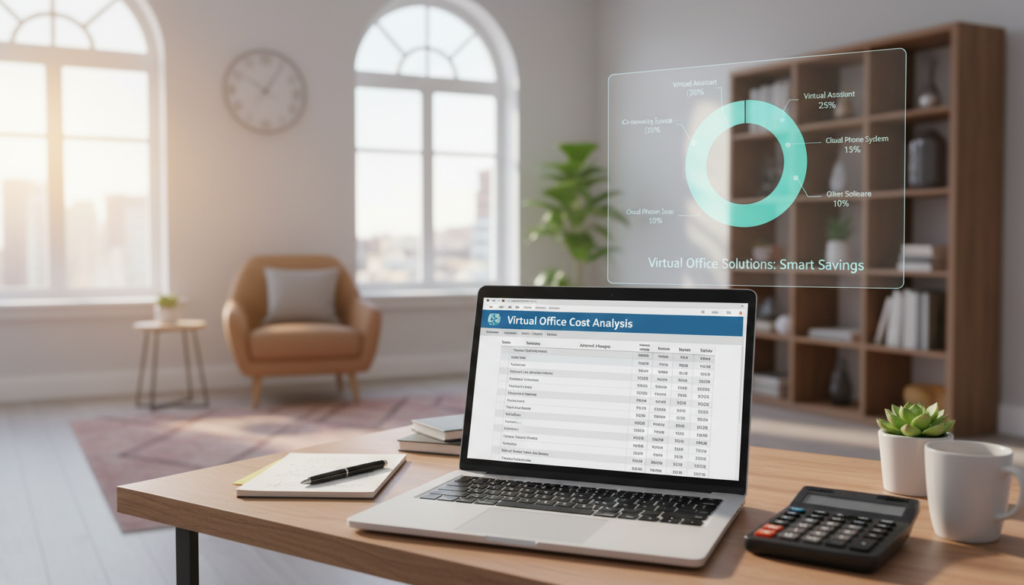
Headline examples give a quick benchmark: address packages often start near SGD 99–128/month, standard bundles around SGD 220/month and premium bundles up to SGD 600/month. TEC lists Premium plans from about SGD 162/month and call handling from SGD 90/month. My Office advertises entry options from S$7.98/month at selected locations (annual billed).
Expect CBD addresses and bundled call handling to sit at the top of the range. Fringe or neighbourhood options are cheaper but may offer fewer included call or meeting hours.
Add-on costs to plan for
Headline prices rarely include every extra. Common additions that change real monthly spend include:
- Mail scanning, per-item handling and storage fees.
- Forwarding and courier charges for urgent documents.
- Phone usage surcharges, call credits or warm-transfer fees.
- Meeting room and day‑use bookings billed hourly or per session.
How this reduces start-up overheads versus physical office space
Using a managed address and reception avoids fit‑out, ongoing utilities and large security deposits tied to a physical office space. That saves cash and shortens the time to trade.
Budget tip: build a 3/6/12 month “true cost” model that adds expected mail volume, call minutes and meeting hours to the headline fee. The lowest price is not always best if the service compromises reliability or compliance.
| Category | Typical cost | Why it matters |
|---|---|---|
| Address package | SGD 99–220 | Registration and mail receipt |
| Bundled plan | SGD 220–600 | Calls, mail and lounge access |
| Add-ons | Per-item fees | Forwarding, scanning, rooms |
“Tie price to expected outcomes: credibility, response speed and access only when needed.”
Compliance essentials for a registered business address in Singapore
A clear, accessible address reduces the chance of missed notices and keeps regulatory checks straightforward.
ACRA: why a street address matters
ACRA requires a physical street address rather than a P.O. Box when you register. This means the registered business must have a real location that can receive statutory mail and inspections if needed. A P.O. Box does not meet this rule because it lacks a physical presence and cannot demonstrate where official records are kept.
Public accessibility during business hours
The registered address must be accessible to the public for at least three hours each business day. Providers meet this by staffing reception, offering scheduled collection windows and logging mail receipt. Confirm the exact hours a provider offers before you sign.
KYC onboarding and verification fees
Expect to submit photo ID for directors and up-to-date company registration documents during onboarding. Providers verify identity and entity records before activating an address and mail handling. Some charge a one‑time onboarding or KYC fee — for example, S$20 is a common reference — so ask for this fee up front.
- Ensure directors know where statutory mail arrives and who may collect or forward items.
- Keep an authorised collector list and a clear forwarding policy to avoid delays.
- Confirm the provider’s mail handling and storage limits to prevent missed notices.
“Correct setup reduces regulatory risk, avoids missed government notices and protects the company’s standing.”
| Requirement | Practical detail | Why it matters |
|---|---|---|
| Physical address | Street address (no P.O. Box) | Meets ACRA registration rules |
| Public access | Min. 3 hours each business day | Allows collection and inspections |
| KYC | Photo ID and recent company documents | Prevents identity and compliance issues |
Security, IT support and service reliability to protect your brand
Your brand depends as much on reliable IT and mail workflows as it does on a prestigious location. Security failures in Wi‑Fi, guest handling or correspondence quickly undermine the professional business image you pay for.
Secure Wi‑Fi, firewall options and in‑house IT support
Expect secure networks: unique passwords per user, WPA3 where available and optional firewall or VLAN isolation for sensitive teams.
Providers such as Servcorp advertise fast, secure Wi‑Fi and in‑house IT support. Confirm in-country technical cover and escalation hours so outages get fixed quickly.
Testing provider responsiveness before you commit
Run a short trial: call the advertised number, book a meeting room and test the booking portal. Time the call answer, note script quality and ask for published response-time SLAs.
Trial the internet with a speed test and request temporary account credentials. A reliable service includes rapid on-site support and transparent incident reporting.
Mail security and controlled access to your correspondence
Mail handling fundamentals: locked storage, controlled collection permissions and an audit log for every scanned or forwarded item.
Confirm who can collect post, how scanned items are stored and the retention policy. Prefer providers with staffed desks rather than anonymous third‑party handlers.
| Risk area | Expectation | Why it matters |
|---|---|---|
| Network | Unique SSIDs, WPA3, optional firewall | Protects data and client calls |
| Support | In‑country IT, SLAs, on-site response | Reduces downtime for staff and clients |
| Locked storage, collection authorisation, logs | Ensures secure handling of statutory and client post | |
| Front desk | Trained staff, no opaque subcontracting | Protects brand during visitor interactions |
Final note: reliability is part of the value proposition, not an optional extra. Choose a provider whose documented processes and on-site team match the benefits you expect from a premium address and service.
Getting set up quickly and onboarding your remote team
Speed and clarity at sign‑up make the difference between days of admin and being operational within minutes.
What you need to activate your office address and phone number
To get started you will usually need KYC documents, basic company details and the chosen address. Providers also ask for a scripted answer for your number and clear forwarding instructions for mail.
Typical activation checklist:
- Director photo ID and recent company registration
- Selected business address and authorised collectors
- Call script, business name to announce and voicemail preferences
- Mail handling rules: scan‑and‑email, hold, or forward instructions
- Payment details and billing contact
Operational timelines — going live in minutes
Many providers can provision an address and basic call handling once verification and payment are complete. Some services advertise a landline and receptionist answering in under five minutes after sign-up.
Realistic timeline: allow time for KYC checks (often same day) and test the routing before major client calls.
Managing bookings and invoices through online portals and apps
Use the provider’s portal or app to book meeting rooms, reserve a day room and track usage. Invoices, add‑ons and credits download from the same dashboard, which simplifies month‑end reconciliation.
Onboard your team by sharing mail notification rules, naming who may approve forwarding, and setting SLAs for handling calls and voicemails.
“Test call routing, confirm mail alerts and review monthly usage to match the package to real need.”
| Step | Action | Outcome |
|---|---|---|
| Pre‑signup | Gather KYC, company details and call script | Smooth activation |
| Sign‑up | Complete payment and verification | Number and address live |
| Post‑activation | Test calls, mail alerts and booking flow | Operational readiness |

Conclusion
A short setup that pairs a recognised address with dependable mail and phone workflows speeds trust-building with partners. Choose a virtual office address that gives an immediate professional presence and reliable call handling.
Decide by location, mail and phone rules, then match packages to actual use. Pick a clear business address or a professional business address, confirm the office address hours and test the provider’s services before committing.
Compliance and security are non‑negotiable. Shortlist providers, test responsiveness and confirm fees in writing. Activate the chosen virtual office option, operationalise mail and call workflows, and gain a repeatable way to support your team and build client trust without a full lease.
FAQ
What are the main benefits of using a professional business address in Singapore?
When should a registered business choose this solution instead of leasing traditional office space?
What exactly is included with an address service and registered business address?
Can I get a local phone number and professional call handling?
Are meeting rooms and day offices available when I need face time with clients?
Do packages include coworking lounge access and networking opportunities?
How does mail handling and mail forwarding work?
What costs should I expect beyond the headline price?
How flexible are contracts and upgrade paths?
Which Singapore locations are most valuable for business needs?
What compliance requirements should I know for a registered business address?
How secure are mail and on-site services?
How quickly can I set up and go live with an address and phone number?
Which businesses benefit most from these services?
How do I choose the right address for my brand and clients?
What should I compare when evaluating packages?
How do these services reduce start-up overheads?

Dean Cheong is a Singapore-based B2B growth strategist and the CEO of VOffice. He helps companies scale revenue through sharper sales execution, CRM implementation, and go-to-market strategy, backed by a strong foundation in business banking and finance from Nanyang Technological University and a track record of driving sustainable, performance-led growth.