

Choosing the right workspace setup is now vital as rental costs rise and most of Singapore’s workforce favour remote or hybrid work.
This guide answers commercial searches for virtual office Singapore reviews with practical checks on address quality, mail handling, phone support and meeting access.
We compare top providers — Servcorp, VOffice, Straits Virtual Office, SnapMail, Osome and OnlyVirtualOffice — and explain which choice suits SMEs, startups, foreign founders or mail-heavy business models.
Expect clear comparisons of what is included and what costs extra, so you can avoid hidden forwarding fees, storage charges, and hourly meeting-room bills.
For compliance, we cover ACRA-registered address suitability and common pitfalls, helping you decide if brand image, budget or operations should drive your pick. For provider details, see a dedicated local option at V Office Services.
Key Takeaways
- Top rated means strong address, dependable mail handling and responsive phone support.
- Compare inclusions vs add-ons to avoid unexpected fees for forwarding or meeting rooms.
- Choose by priority: brand image (CBD + receptionist), budget (annual plans) or operations (scanning and workflows).
- Different providers suit SMEs, startups, founders overseas and mail-heavy companies.
- Check ACRA address rules to stay compliant and prevent registration issues.
Why virtual offices are booming in Singapore right now
Rising rents and new work habits are reshaping how Singapore firms choose workspace solutions.
High office costs and a shift to hybrid work are the main drivers. Over 70% of the local workforce now favours remote arrangements, so long leases and large fit-outs look risky for many companies.
Teams can operate anywhere but still need an official presence and dependable mail handling. Many businesses treat a virtual office as core infrastructure: a recognised address, a mailroom and optional receptionist services rather than daily desks.
- Startups extending runway by cutting fixed costs.
- SMEs lowering overhead without losing a professional address.
- Foreign companies establishing local presence quickly.
- Founders who prefer privacy over using home addresses.
Time savings are tangible: fewer admin trips, faster mail alerts and the option to book meeting space only when needed. That reduces recurring costs and frees staff for revenue work.
Virtual arrangements are not ideal for businesses with heavy daily on-site needs, such as manufacturing or labs. The next section explains exactly what is included and what is not.
What a virtual office in Singapore includes (and what it doesn’t)
Choosing the right solution means knowing what you actually get: a professional address and a set of business services, rather than a guaranteed desk every day.
How it differs from coworking and a physical office
Virtual arrangements supply an official address and operational handling of mail and calls. They rarely include a permanent workspace.
Coworking provides desks, meeting lounges and hot-desking access. It is a workspace product, not primarily an address service.
A physical office demands long leases, fit-out and fixed overheads. By contrast, pay-as-you-go meeting rooms and scalable services reduce committed spend.

Core inclusions to expect
- Business address use for marketing, ACRA registration checks and mail receipt.
- Mail handling—notifications, holding, forwarding and optional scanning on request.
- Phone services: dedicated numbers, call answering, forwarding and voicemail (often charged as an add-on).
- Meeting rooms access — some packages include a few hours; many require booking and hourly fees.
What it does not include: a permanent desk, daily lounge access unless bundled, or full-time reception for all entry tiers. Not all providers include phone answering or meeting rooms in their basic plans.
For a practical checklist on what to look for when renting an address and related services, see this short guide at what to look for when renting a virtual.
Can you use a virtual office as a registered office address in Singapore?
Many founders ask if a rented address can legally serve as their company’s registered office. Yes — but only if the location meets ACRA’s rules.
ACRA requirements you must check
Confirm three practical points with any provider. First, the address must be a physical location, not a P.O. Box. Second, it must be publicly accessible for at least three hours during normal business hours. Third, it must be able to reliably receive official government mail.
Why provider credibility matters
Non-compliance risks missed letters, delayed filings and fines. Choosing a credible provider reduces those risks.
- Consistent mail handling: logged receipts and prompt notifications.
- Clear operating hours: documented public access times.
- Responsive support: procedures for holidays, peak periods and urgent delivery.
Due diligence is simple: ask how official correspondence is logged, how quickly notifications are sent, and what contingency plans exist. We weight these factors in our provider ratings and explain the methodology next.
How we reviewed and ranked these virtual office providers
We scored each provider against practical business needs to show which packages match different company priorities. Our aim was to make comparisons that reflect real costs and day‑to‑day workflows.

Scoring framework
Weighted criteria let readers map the results to their own priorities. Scores reflect address prestige, mail speed, phone setup, meeting access, contract flexibility and support responsiveness.
Address quality and business image
We checked CBD presence, recognisable buildings and how an address supports sales or partnership efforts. Image matters for clients and first impressions.
Mail handling and mail forwarding
Speed of notifications, options for self‑collection, scanning and forwarding frequency were graded. Storage windows and disposal policies also influence true costs.
Phone, meeting rooms and coworking access
Phone criteria covered live answering, dedicated lines and call forwarding fees. Meeting room hours, booking ease and coworking access were scored for value.
Contracts, pricing and support
We favoured transparent pricing, month‑to‑month options and easy upgrades. Finally, client feedback and support response times swayed rankings for time‑sensitive mail and parcels.
“Scoring is practical — choose the provider whose strengths map to your operations and budget.”
Top-rated virtual office Singapore reviews: the best providers compared
Below is a compact comparison of leading providers to help you shortlist by budget, brand image and operational needs.
Servcorp — premium CBD image and full support
Best for: companies that need prestige addresses and receptionist support.
Locations include Marina Bay Financial Centre, CapitaGreen and Suntec Tower Three. Packages start from SGD 128/month and rise to a Premium level at SGD 600/month. Features: mail and courier handling, a dedicated local number, live receptionist, coworking lounge access and pay‑as‑you‑go meeting rooms.
VOffice — ultra‑budget annual plans
Best for: founders seeking a basic business address with minimal cost.
Launched in 2014, VOffice serves 9,000+ clients. Annual-only pricing runs from SGD 57/year (Economy) to SGD 197/year (VIP). Expect mail alerts, self-collection and meeting hours on higher tiers; forwarding is optional with credit top-ups.
Straits Virtual Office — Suntec City value pick
Best for: SMEs wanting a strong local rating and mid-market features.
Offers Suntec City as an office address and near‑100 five-star ratings. Plans are annual and affordable, with meeting rooms from SGD 20/hour and add-ons for scanning and cheque deposit. Call forwarding is charged per minute.
| Provider | Starting price | Best fit | Key features | Meeting rooms |
|---|---|---|---|---|
| Servcorp | SGD 128/month | Premium brand image | Live receptionist, mail handling, coworking access | Pay-as-you-go |
| VOffice | SGD 57/year | Ultra-budget | Mail alerts, self-collection, basic forwarding | Included on higher tiers |
| Straits | SGD 13.99/month | Mid-market value | Suntec City address, add-ons for scanning | SGD 20/hour |
| SnapMail | SGD 6/month | Mail-first workflows | Multiple collection points, scanning, forwarding | Not primary focus |
| Osome | Bundled with incorporation | Incorporation-led | Registered address, digital mail forwarding, app reminders | Pay-as-you-go |
| OnlyVirtualOffice | Competitive | Flexible value | Scalable add-ons and responsive support | Optional add-ons |
SnapMail, Osome and OnlyVirtualOffice — specialist and flexible picks
SnapMail suits teams with heavy parcel and letter workflows. It offers scanning, holding, mail forwarding and six self‑collection points, plus a 30‑day money‑back guarantee.
Osome bundles a registered address with incorporation and app-based digital mail handling. This is helpful for overseas founders wanting a streamlined setup.
OnlyVirtualOffice provides a low-cost base address and lets you scale into phone services and meeting rooms as needs grow. They are noted for responsive customer service.
“Choose a provider that maps to your budget, image and daily mail needs rather than the cheapest headline price.”
- Budget pick: VOffice for year‑long low pricing.
- Premium pick: Servcorp for CBD image and receptionist services.
- Mail workflows: SnapMail for scanning and forwarding options.
- Incorporation bundle: Osome for registration plus digital mail handling.
Servcorp review: best for premium image, receptionist support and meeting rooms
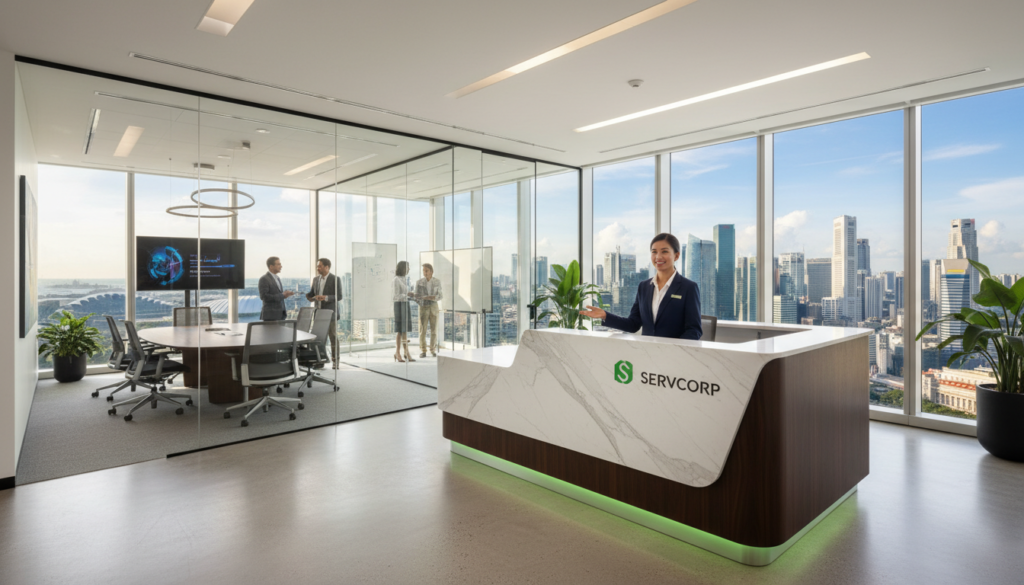
Servcorp positions itself for companies that prioritise a premium business image and dependable client-facing services. Its named locations — Marina Bay Financial Centre, CapitaGreen, The Metropolis and Suntec Tower Three — give firms a recognisable address that helps with first impressions and investor conversations.
Packages and pricing at a glance
The entry-level Address Package starts from SGD 128/month and covers an official business address, basic mail forwarding and limited coworking access (about 1 hour/day).
The Virtual Office Package from SGD 220/month adds a dedicated local number and a live receptionist who answers in your company name, plus increased coworking time (around 3 hours/day).
The Premium Virtual Office at SGD 600/month raises coworking to roughly 60 hours/month and includes up to seven days of private room use per month.
What you actually get
Mail and courier handling is logged and notified; forwarding and higher-touch options are available. A dedicated local number and live receptionist improve inbound caller trust and professional presentation.
Coworking, meeting rooms and trade-offs
Coworking lounges are included to varying degrees by plan. Meeting rooms and private rooms are bookable pay-as-you-go, keeping overheads flexible.
Higher monthly costs suit client‑facing teams or firms that want a memorable business address. Lean startups may find the price premium hard to justify unless they need the receptionist and meeting room access frequently.
VOffice and Straits Virtual Office: best value picks for SMEs and lean startups
For cost-conscious startups and lean SMEs, there are two value-led providers that balance credibility with low headline costs.
VOffice packages and pricing (annual billing)
Economy – SGD 57/year: business address, email mail alerts and self-collection. This is the lowest baseline for a registered business address.
Business – SGD 97/year: adds a shared fax and four hours of meeting room use. Weekly local forwarding is optional via a SGD 30 mail credit top-up.
VIP – SGD 197/year: includes eight hours of meeting time and eight hours of office room use. Weekly forwarding can be enabled with SGD 30 (local) or SGD 100 (overseas) credit top-ups.
Launched in 2014, VOffice serves over 9,000 clients and is best when annual savings and a low baseline cost matter most.
Straits plans and pricing (12-month)
Premium – SGD 13.99/month: address use, email alerts and a shared fax. Forwarding charged as an add-on.
Plus – SGD 17.99/month: designed for foreign-registered firms. Optional mail opening/scanning at SGD 13/month and cheque deposit at SGD 10 per cheque make administration easier.
Professional – SGD 45.99/month: adds a dedicated phone line and call forwarding. Note that call forwarding is billed per minute.
Straits is attractive for a Suntec City address and nearly 100 five-star Google ratings, offering stronger phone and foreign-company options.
Mail workflows, add-on fees and what to watch
- Alerts: check notification speed and format (email/app).
- Self-collection: see locations and opening hours — convenience reduces forwarding costs.
- Forwarding cadence: weekly vs on-demand affects total costs; compare credit top-ups.
- Scanning/opening: often charged per month or per item — budget for frequent scans.
- Storage and disposal: check free holding days before storage fees apply.
Phone line realities and meeting room access
Phone services vary: shared numbers are common on low tiers, while dedicated lines and per-minute forwarding appear at higher tiers. Frequent inbound calls can make per-minute forwarding expensive.
Meeting rooms: VOffice bundles limited hours on mid and top tiers. Straits rents rooms at about SGD 20/hour. Forecast monthly usage to compare true costs.
| Feature | VOffice | Straits |
|---|---|---|
| Starting price | SGD 57/year (Economy) | SGD 13.99/month (Premium) |
| Included meeting time | 4–8 hours on mid/top tiers | None included; SGD 20/hour rental |
| Phone line | Shared; dedicated on VIP with add-ons | Dedicated on Professional; forwarding billed per minute |
| Foreign-firm support | Standard address only | Plus plan: mail opening, cheque deposit options |
“Choose by matching real usage to package inclusions — the cheapest headline price can be costly once add-ons stack up.”
Decision guide: pick VOffice for the lowest baseline costs and bundled meeting hours. Choose Straits for Suntec City image and stronger phone or foreign-firm administrative options.
SnapMail and mail-focused alternatives: best for mail handling and parcel workflows
For teams that get more parcels than visitors, a mailroom‑first provider can save time and cost.

SnapMail offers a city‑centre office address with a 30‑day money‑back guarantee and six free self‑collection points. It is built for businesses that need strong mail handling rather than reception or meeting rooms.
Plans and who they suit
S4: lowest tier from SGD 6/month (36‑month) to SGD 12/month (6‑month) — good for low‑mail founders.
S3: from SGD 8/month (36‑month) to SGD 25/month (3‑month) — includes handling of 10 letters/month for letter‑heavy professionals.
B1 Premium: from SGD 20/month (36‑month) to SGD 40/month (3‑month) — adds a dedicated physical letterbox and handling of 10 incoming items/month for e‑commerce users.
Operational features that matter
- Mail forwarding schedules and costs are clear; choose weekly or on‑demand forwarding.
- Scanning/opening options let you inspect contents before forwarding.
- Holding windows, secure disposal and notifications keep workflows predictable.
- Six collection points cut travel time for founders on the move.
“Prioritise a mailroom provider if you rarely need meeting rooms or phone answering — depth of mail service beats a broader package.”
Payments accept bank transfer, PayPal, PayNow and cards. Longer terms lower monthly pricing, so pick a contract that matches predictable mail volume.
How to choose the right virtual office package for your business
A pragmatic buying decision begins with three commercial checks: brand fit, operational reliability and true monthly cost. Use these to shape your short list before comparing pricing and small print.
Choosing an address that matches brand and client expectations
Pick a CBD-style address if your sales cycle relies on high-trust meetings and investor perception. For cost efficiency, a reputable non-CBD office address often works well.
Always validate ACRA requirements: physical location, public access for at least three hours and the ability to receive official correspondence. This protects your company from missed legal mail.
Map services to real needs
- Estimate mail volume — low, medium or high — to decide on scanning, opening and mail forwarding frequency.
- Meeting time — forecast hours per month to compare included meeting rooms versus hourly hire.
- Phone and support — decide if live answering will improve conversions or if voicemail suffices.
Compare true costs, contracts and reputation
Look beyond subscription pricing. Add forwarding, storage, per-minute call forwarding and hourly rooms to your monthly cost model.
Contract strategy: choose month-to-month for uncertainty and annual for stable savings. Multi-term deals suit predictable volumes but increase lock-in risk.
“Shortlist 2–3 providers, confirm inclusions in writing and test support with a pre-sales query.”
For further buying advice see choosing a virtual office and consider local service options at local service options.
Conclusion
, A practical choice balances legal compliance, brand goals and daily workflows. The best virtual office matches ACRA requirements while supporting your client-facing image and operational needs.
Top picks vary by focus: Servcorp for premium image and receptionist-led support; VOffice for the lowest-cost registered address; Straits for Suntec City value and strong ratings; SnapMail for deep mail and parcel handling; and Osome or OnlyVirtualOffice for bundled or scalable approaches.
Confirm ACRA fit — a physical address, public access hours and reliable mail receipt — before you commit. Compare total costs, not just headline pricing, and factor in forwarding, storage, calls and meeting-room fees.
Next step: shortlist two or three providers, validate what the package includes in writing and pick a contract term that supports sustainable business success without unnecessary lock‑in.
FAQ
What services do top providers typically include in a business address package?
Can I use a serviced business address as my registered ACRA address?
How do mail forwarding, scanning and collection options differ between providers?
Are receptionist and phone-answering services included or charged extra?
How do meeting rooms and coworking access work with address packages?
What should I watch for in contract terms and billing options?
Which types of businesses benefit most from these services?
How do providers ensure credibility and compliance for clients?
What are typical pricing differences between premium and budget packages?
How can I compare providers effectively before committing?

Dean Cheong is a Singapore-based B2B growth strategist and the CEO of VOffice. He helps companies scale revenue through sharper sales execution, CRM implementation, and go-to-market strategy, backed by a strong foundation in business banking and finance from Nanyang Technological University and a track record of driving sustainable, performance-led growth.