

Curious which provider will cut your checkout drop-offs and speed up settlements?
The guide helps businesses choose, integrate and optimise a payment gateway for 2026. It covers online checkout, in-store QR and POS, local methods such as PayNow and SGQR, international cards and multi-currency settlement.
We compare popular providers like Airwallex, PayPal, Stripe, Adyen and Shopify Payments. Airwallex supports over 160 local methods and like-for-like settlement in 20+ currencies, which matters for cross-border sellers and omnichannel retail.
This buyer’s guide sets expectations for commercial readers. You will learn how to weigh features, fees, settlement speed, integration options (plugins, links, APIs) and compliance. The aim is to boost checkout conversion, cut failed transactions and keep reconciliation clean.
Remember: the right partner fits your business model—SME, SaaS subscription, or large retail—not just the cheapest headline rate.
Key Takeaways
- Compare providers by settlement speed, integration and pricing, not price alone.
- Support for local methods and multi-currency settlement improves conversions.
- Choose integrations that match your stack: plugins, payment links or APIs.
- Good reconciliation and fraud controls reduce operational overhead.
- Provider fit depends on business model and cross-border needs.
Why payment gateways matter for Singapore businesses in 2026
For retailers in a highly digital market, the difference between a completed order and an abandoned cart is often the checkout flow.
Singapore’s online habits and checkout conversion
About 71% of the population shops online and more than half buy at least once a week. Average orders can reach roughly US$137.4.
That frequency makes even small improvements in conversion valuable. A tiny lift in completion rates scales quickly across frequent buyers.
Cart abandonment risk when preferred methods aren’t available
Research shows 77% of consumers will abandon a cart if their preferred method is missing.
Offer broad payment methods — cards, digital wallets, PayNow/SGQR and BNPL — to cut abandonment and recover revenue.
What “getting paid faster” looks like
Getting paid faster means quick approvals, predictable settlement windows and clean reconciliation data for finance teams.
Finance teams want fewer manual exports, clear transaction IDs and easy matching of refunds and disputes to orders. Faster, timely payouts free working capital for inventory, ads and payroll.
“Choice and speed at checkout are the most direct levers for improving conversion and cash flow.”
| Metric | Local reality | Business impact |
|---|---|---|
| Online shoppers | 71% of population | High sensitivity to checkout changes |
| Weekly buyers | 50%+ | Small percentage change scales revenue |
| Cart abandonment | 77% if preferred method missing | Loss of immediate revenue and lifetime value |
- Commercial decision: choose partners for revenue, operations and risk — not fees alone.
- Operational win: faster settlements improve cash flow and reduce manual reconciliation overhead.
What a payment gateway is (and what it is not)
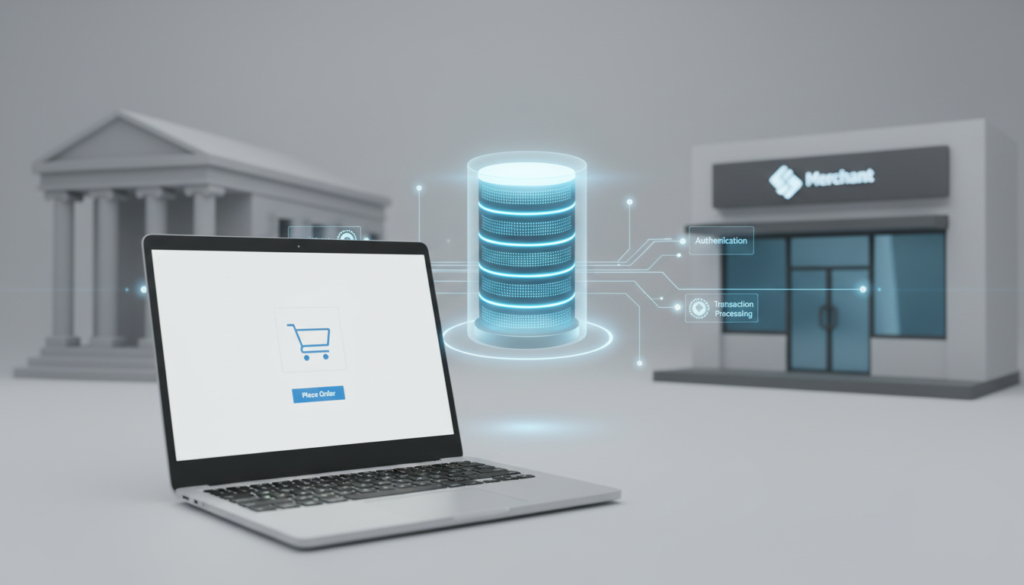
Think of the checkout as a relay: the tool that securely captures a customer’s card or wallet details, encrypts them and sends those details to the right financial parties for authorisation.
The main parties are easy to map: the customer, the customer bank (issuer), the acquiring bank, the card network and your business systems. Each plays a defined role in approval and settlement.
What happens at checkout
The gateway securely transmits data to the acquiring bank, which routes it to the issuer via card networks. A success or decline returns to the site, app or POS in seconds.
What it is not
It is not a bank account, nor is it always the entity that holds funds long term. Some providers only route transactions; others also host merchant accounts and handle settlements.
“Bundled services speed launch but can limit currency and method flexibility.”
| Role | Typical function | Impact on choice |
|---|---|---|
| Gateway | Secure capture & authorisation | Speeds checkout, affects decline rates |
| Processor | Handles transaction routing | Controls connectivity and performance |
| Merchant account | Receives and holds funds | Affects settlement currency and timing |
- Note: Bundling simplifies contracts but can reduce multi-currency or alternative-method options.
How a payment gateway works from checkout to settlement
A transaction moves through distinct technical steps from the moment a customer clicks pay to when funds land in your bank account.
Encryption, authorisation, capture and payout happen quickly, but each step matters for revenue and operations.
Core lifecycle:
- Customer initiates payment → details are encrypted or tokenised.
- The gateway sends an authorisation request to the acquiring bank.
- Issuer approves or declines; status returns in seconds.
- On approval the merchant captures the authorised amount for settlement.
- Settlement batches the transaction and triggers a payout to the merchant bank account.
Authorisation vs capture — why it matters
Authorisation reserves funds; capture actually charges the card. This split supports shipping, pre-orders and partial fulfilment.
Choosing authorise-only for delayed fulfilment reduces refund work but requires careful capture windows.
Online versus in-store flows
Online checkouts typically use hosted fields or APIs. In-store uses POS terminals, Tap to Pay on mobile and QR acceptance (PayNow/SGQR).
Different payment options affect where network failures and 3DS issues appear and how refunds are processed.
What you should receive back: order reference, transaction ID, status updates and refund notifications. Attach metadata for later reconciliation and export.
“Correct webhook configuration and clear metadata keep reconciliation tidy and reduce manual fixes.”
| Step | Result | Impact |
|---|---|---|
| Authorisation | Funds reserved | Allows capture later |
| Capture | Funds collected | Ties to shipping rules |
| Settlement | Batch payout | Cash flow timing |
payment gateway setup singapore company: what you need before you start
Before you sign contracts, confirm the documents and tech readiness that shorten onboarding and reduce surprises.
Business documents and account setup basics
Most underwriters require verified ACRA details, beneficial owner and authorised signatory information, a local bank account and your website or app URL. Prepare clear product descriptions, refund and delivery policies to speed review.
Underwriters assess chargeback risk, cross-border exposure and fulfilment timelines. Honest answers reduce delays and lower the chance of extra underwriting conditions.
- ACRA registration and UBO details
- Bank account and authorised signatory
- Website/app URL and sample product listings
Website and checkout readiness for card and wallet acceptance
Use HTTPS, show clear pricing, taxes and shipping, and keep the payment step friction-free for cards and wallets. Prioritise one-click or tokenised flows where possible to lift conversions.
Compliance checkpoints: pci dss and data protection expectations
Understand your pci dss scope. Hosted or embedded hosted fields reduce merchant scope, while direct capture increases obligations. Keep personal data minimal and encrypt transmissions.
Choose providers with strong documentation and local support. Plan whether you will use a no-code plugin or a developer sprint, allocate testing time and set a clear go-live checklist.
Local payment methods Singapore customers expect at checkout
Offering familiar, bank-led methods often converts hesitant local buyers into customers. Local payment methods reduce friction and build trust for domestic shoppers. They are not optional add-ons; they shape conversion and lifetime value.
PayNow and SGQR for fast, familiar bank-based payments
PayNow and SGQR deliver near-instant confirmations and a familiar bank flow on mobile. They suit mobile-first checkouts and customers who prefer direct bank debits. Use them for quick settlement signals and lower decline anxiety.
FAST, GIRO and bank transfers for higher-value or B2B transactions
Bank transfers, including FAST and GIRO, are common for high-AOV orders, invoices and B2B billing. These methods are preferred where card rails are less suitable, such as education fees or corporate purchases.
Digital wallets: Apple Pay, Google Pay, GrabPay, ShopeePay
Digital wallets speed checkout for one-click buyers. Apple Pay and Google Pay reduce form friction on mobile and desktop. GrabPay and ShopeePay reach ecosystem users and help with marketplace promos and loyalty-driven sales.
Buy Now, Pay Later: Atome and PayPal Pay Later
BNPL options lift conversion on mid-to-high ticket baskets. Atome and PayPal Pay Later provide instalment choices that increase average order value and reduce immediate affordability barriers.
“Match methods to customer segments, device share and average order value for the best mix.”
Operational notes: refunds and disputes vary by method and require clear reconciliation mapping. Track method-level reporting so finance teams can reconcile refunds, chargebacks and settlement timing consistently.
Choosing the right payment gateway: features that affect revenue and risk
The right technical mix balances authorisations, fraud controls and finance-friendly reporting to protect revenue without adding friction.
Checkout experience shapes conversion. Hosted pages reduce PCI scope and speed launch. Embedded fields keep brand control and lower drop-off. Redirects increase method coverage but risk more cart abandonment.

Recurring billing and card maintenance
For subscriptions, tokenisation and network token support are essential. Automated card updaters reduce involuntary churn by refreshing expired card data.
Refunds, disputes and chargeback tools
Look for evidence workflows, clear reason codes and proactive alerts. A dispute-ready platform makes compiling responses fast and reduces lost cases.
Fraud controls and conversion trade-offs
Good fraud tools include 3D Secure, velocity checks and rule-based controls. Too strict rules can block genuine buyers; tuned rules lower losses without harming authorisation rates.
Reporting and integration for finance teams
Prioritise settlement reports, fees by method, payout reconciliation and exports that match accounting formats. Strong APIs and clear webhook events simplify integration with ERPs and order systems.
“Assess support SLAs, local hours and escalation paths—especially for big campaign days.”
- Match requirements to model: SMEs need simple UI and local methods; platforms want marketplaces and split payouts.
- Subscription services prioritise automated card updaters and billing retries.
- Omnichannel retailers need unified reporting across POS and online channels.
Security, fraud prevention, and compliance in Singapore
Compliance and good risk tooling protect revenue and customer trust at checkout. Strong security reduces chargebacks and keeps merchant access stable.
PCI DSS defines how card data must be handled. Hosted or redirect collection shifts most obligations to the provider, while direct capture raises merchant scope. Merchants should confirm their PCI DSS level and follow required controls such as TLS, access logging and segmentation.
Tokenisation replaces stored card data with a token. This lowers exposure for one‑click and subscription flows and shortens breach impact. Tokens let you charge repeat buyers without keeping raw credentials on your systems.
3D Secure, velocity checks and rule-based controls
3D Secure (3DS) adds issuer verification during authorisation. It can shift liability on certain transactions, but it may add friction at checkout. Use adaptive 3DS to trigger challenges only when risk signals rise.
Velocity checks and rules block suspicious patterns: repeated attempts from one IP, many cards from one device, geo-mismatch between card and billing address, or rapid retries. Tune thresholds to avoid false positives that hurt conversions.
What to check in a MAS-licensed provider
Verify licensing, safeguarding measures and operational resilience. Check how the provider handles disputes and whether it shares issuer decline trends and fraud dashboards.
“Fewer fraudulent transactions mean fewer chargebacks, steadier accounts and higher lifetime value.”
- Review ongoing metrics: fraud rates, dispute ratios and issuer decline patterns.
- Ask for clear logs, webhook events and contract terms on dispute handling.
- Ensure the provider offers tokenisation, 3DS and rule-based controls you can tune.
Payment gateway fees in Singapore: how to compare pricing properly
Fees and pricing shape margins more than headline rates. Small differences per transaction compound across many orders, so forecast costs before you sign a contract.
Blended pricing vs Interchange++
Blended models give a single predictable rate that is easy to forecast. Interchange++ breaks costs into interchange, scheme and processor components, which can be cheaper at scale but harder to predict.
Typical domestic and fixed components
Common domestic benchmarks are 3.3% + S$0.50 and 3.4% + S$0.50. Use these as baseline assumptions when modelling margins by basket size.
International cards, cross-border charges and FX
International card transactions often add a markup. For example, Stripe lists 3.9% + S$0.50 for international and may add ~2% FX on conversion. Airwallex shows 3.6% + S$0.50 for international flows.
Local methods and hidden costs
PayNow/QR and some wallets typically cost less than cards, while bank transfers are often cheaper but need more reconciliation. Watch for hidden charges: minimum monthly invoices, payout or refund fees, chargeback fees and platform surcharges.
- Do this: build a scenario model by basket size, method mix and domestic vs international split.
- Compare total cost per transaction, not just the headline rate.
Settlement speed, cash flow control, and multi-currency outcomes
Settlement speed refers to when funds become available for use, not just when a transaction is authorised. A fast settlement means money lands in your account sooner and can be used for stock, ad spend or contractor invoices.

Like‑for‑like settlement and FX leakage
Like-for-like settlement means you receive funds in the same currency your customers pay. Keeping USD, EUR or GBP receipts avoids forced conversions that create FX leakage.
FX leakage appears as multiple spreads: issuer conversion, processor margin and a conversion by your bank. That stacking of spreads reduces margins and complicates pricing.
Holding and settling in multiple currencies
Holding revenue in the original currency lets you convert when rates are favourable. It also lets you pay overseas suppliers or ad platforms directly from the same currency account.
| Factor | Why it matters | Practical question |
|---|---|---|
| Settlement speed | Drives working capital availability | When do funds clear into our operating account? |
| Supported currencies | Reduces FX conversions and extra fees | Which currencies can the provider settle to our bank? |
| Multi‑currency accounts | Allow strategic conversions and direct foreign payouts | Do we need extra accounts to hold receipts? |
| Fees & pricing transparency | Impacts net margin after conversions | Are FX spreads and payout fees clearly shown? |
Evaluation checklist: confirm payout schedule, supported settlement currencies and whether like-for-like receipt is possible for where customers pay. The best option depends on revenue mix and how often you need to convert or repatriate funds.
“Control over settlement timing and currency preserves cash flow and reduces hidden costs.”
Integration options for Singapore companies: no-code to API builds
Deciding how to connect your checkout to the outside world shapes launch speed and long‑term flexibility.
Major providers offer three clear paths: plugins for common platforms, shareable links/QRs for fast selling, and full APIs for custom flows and marketplaces.
Plugins for Shopify, WooCommerce, Magento and other platforms
Plugins install quickly and remove most developer work. They suit standard eCommerce stores that use popular platforms.
Good for: merchants needing a quick, low-cost integration with native checkout tools and recurring updates handled by the provider.
Payment Links and QR links for selling without a full website
Links and QR codes are market-ready within hours. They work well for social commerce, pop-ups and service bookings.
Good for: sellers who need to accept orders without a full storefront or want a fast sales channel during events.
APIs for custom checkout flows and marketplace payouts
APIs give full control: custom UI, split payouts, advanced metadata and complex routing for platforms.
Required when: you run a marketplace, need split settlements or want to capture rich order data for reconciliation.
- Compare paths by complexity and cost: plugin installation vs links vs custom API integration.
- Ensure webhooks report status, use idempotency for retries and never log client-side tokens.
- Test refunds, partial captures and failure scenarios in sandbox before going live.
- Let platform choice influence provider selection—native platform options can simplify operations.
| Option | Speed to market | Control | Best use case |
|---|---|---|---|
| Plugin | Fast (hours) | Medium | Standard eCommerce on Shopify/WooCommerce |
| Links / QR | Very fast (minutes–hours) | Low | Social sales, pop-ups, service bookings |
| API | Slow (weeks) | High | Custom checkout, marketplaces, split payouts |
| Key checks | Documentation & SDKs | Sandbox & webhooks | Local support & SLAs |
“Pick the path that matches your launch timeline, technical resources and long‑term operational needs.”
Integration checklist: SDK availability, quality docs, sandbox access, webhook reliability and local support hours. Confirm these before you commit to a provider.
Best payment gateway providers Singapore businesses shortlist
A practical shortlist balances method coverage, settlement currency and integration effort.
Start from your business model and target markets. Identify must‑have features: wallets, card rails, PayNow/SGQR access and multi‑currency receipts. Use those filters to reduce a long list to a workable shortlist of providers singapore.
Global platforms such as Stripe, PayPal and Adyen offer wide card and wallet reach and strong APIs. Local specialists like HitPay or Opn Payments focus on local payment methods and simpler onboarding. Hybrid options, for example Airwallex, combine regional methods with multi‑currency settlement.
Sometimes the right payment mix needs two providers. A second provider can add PayNow or a specific wallet, or improve FX and like‑for‑like settlement. The trade‑off is operational complexity versus broader coverage and redundancy.
- Keep the shortlist tight: match model → method coverage → settlement needs.
- Compare global reach, local method support and integration effort.
- Weigh multi‑provider stacks for redundancy, but plan reconciliation work.
Expect local support to matter: compliance knowledge, dispute handling and onboarding speed reduce launch risk. The next section gives a structured comparison of methods, settlement currencies, pricing and integration effort so your shortlist becomes actionable.
Provider comparison snapshot: payment methods, settlement, and key trade-offs
A tight comparison framework turns vendor claims into actionable choices for finance and engineering teams.
Cards, digital wallets, and local payment options coverage
Start by mapping coverage: Visa, Mastercard, Amex and regionals matter for authorisations and chargebacks. Include digital wallets such as Apple Pay and Google Pay for one‑click checkouts.
Also list local payment options — PayNow/SGQR, bank transfers and BNPL — so you know which channels reduce cart abandonment.
Multi-currency settlement availability across providers
Check whether providers offer single‑currency payouts or multi‑currency holding accounts. Like‑for‑like settlement avoids FX stacking and gives finance more control.
Pricing patterns: per transaction fees and FX costs
Interpret pricing as percentage + fixed fee and an FX mark‑up for cross‑border sales. Compare headline rates against likely method mix to estimate real fees.
“Assess coverage, settlement, cost and operational fit — not just the headline rate.”
- Framework: coverage, settlement, cost, operational fit.
- Method categories: cards, digital wallets, PayNow/SGQR, bank transfers, BNPL.
- Positioning: developer‑first (Stripe), enterprise omnichannel (Adyen), wallet‑trust (PayPal), Shopify‑native, SME‑focused and FX‑heavy players (Airwallex).
Practical tip: shortlist 2–3 providers and run live tests. Real conversion, reconciliation and pricing data reveal trade‑offs that a table alone cannot.
Airwallex for local payment methods and like-for-like settlement
Airwallex focuses on broad method coverage and currency control for merchants selling across borders. It supports 160+ local payment methods and like‑for‑like settlement in 20+ currencies.
Coverage highlights: cards, wallets and bank rails
Coverage includes cards, Apple Pay/Google Pay, PayNow‑style bank rails and common wallets used locally. That range helps reduce checkout friction and lift conversions.
Pricing guideposts
Typical guide rates are domestic cards and wallets at 3.30% + S$0.50 and international at 3.60% + S$0.50. Local methods often price as S$0.50 + local method fee, which matters for low‑AOV sales where fixed fees bite margins.
Best fit and operational benefits
Airwallex suits eCommerce, platforms and cross‑border growth teams. Like‑for‑like settlement means you can charge USD to US buyers and receive USD, avoiding forced conversion and FX surprises.
- Supports clearer reporting and fewer conversions on bank transfers and wallets.
- Helps teams price in local currency and protect margins.
- Confirm in‑person POS availability and regional rollouts with the provider before committing.
“Like‑for‑like settlement reduces FX leakage and gives finance teams predictable net receipts.”
Stripe, PayPal, Adyen, Shopify Payments, HitPay, Opn Payments: which suits your model
Consider the vendor by technical needs, market reach and finance controls to find the best match.
Stripe is ideal for developer-led builds and subscriptions. Its APIs and billing tooling support complex flows and tokenised recurring charges. Typical rates: ~3.4% + S$0.50 domestic and 3.9% + S$0.50 international (+ ~2% FX when conversion occurs).
PayPal favours merchants who want wallet-led trust and global reach. It often uses hosted flows, which can lift conversions but may cost more — domestic ~3.9% + S$0.50, higher for cross-border with FX mark-ups.
Adyen suits enterprise omnichannel needs. It unifies online and in-store processing and offers advanced risk tools, but finance teams must handle Interchange++ forecasting and possible minimums.
Shopify Payments is simplest for stores on Shopify. It centralises operations but may require a secondary provider for local rails like PayNow.
HitPay targets SMEs needing PayNow, wallets and in‑person acceptance with straightforward pricing and quick onboarding.
Opn Payments helps brands expanding across Southeast Asia and Japan with regional methods and clear, method-based fees.
| Provider | Best for | Notable strengths | Sample pricing |
|---|---|---|---|
| Stripe | Developer-led, SaaS | Flexible APIs, subscription tooling | 3.4%+S$0.50 domestic; 3.9%+S$0.50 intl (+FX) |
| PayPal | Wallet trust, international shoppers | High conversion via familiar wallet | ~3.9%+S$0.50 domestic; higher cross-border fees |
| Adyen | Enterprise omnichannel | Unified commerce, advanced risk tools | Interchange++ (varies by scheme) |
| Shopify Payments | Shopify-native stores | Operational simplicity, native checkout | Platform rates vary; may need add-on for local rails |
| HitPay | SMEs, in-person sales | PayNow/QR, wallets, quick onboarding | ~2.8%+S$0.50 domestic |
| Opn Payments | Regional expansion | SEA & Japan method coverage | ~3.3%+S$0.30 for cards |
“Shortlist two providers and run live tests — real conversion and reconciliation data is decisive.”
For a compact shortlist and method-level tests, see this practical comparison of top vendors: top providers.
Shortlisting by business type: finding the best payment gateway for your use case
Choosing the right provider comes down to matching commercial goals with daily operations. Different models demand different trade-offs: conversion lift, fraud controls, settlement speed and reconciliation ease all matter.

Singapore-first SMEs
Priorities: PayNow/SGQR support, low operational overhead and predictable pricing. These businesses prize simple reconciliation and SGD settlement to keep cash flow steady.
Cross-border sellers
Priorities: Multi-currency holding, transparent FX pricing and broad method coverage. Like-for-like settlement reduces FX leakage and protects margins for overseas sales.
SaaS and subscriptions
Priorities: Tokenisation, automated card updaters, dunning tools and clear invoicing. Recurring billing tools cut churn and reduce manual billing work for subscription businesses.
Omnichannel retailers
Priorities: POS compatibility, unified reporting across online and in-store, and streamlined refunds. A single view for reconciliation saves time and lowers error rates.
- Must-have: clear fees, reliable authorisation rates, robust webhooks and concise reconciliation exports.
- Nice-to-have: advanced loyalty integrations, expansive marketplace features and risky feature add-ons that don’t improve ROI.
The best payment gateway is the one that fits your revenue model, risk profile and operating capacity.
Setup checklist for a smooth launch and a higher-converting checkout
A controlled rollout reduces surprises and keeps checkout conversion steady on day one.
Before go‑live, confirm method coverage that matches your customer mix and average basket. Choose local‑first methods (PayNow and wallets) for domestic shoppers, or cards plus PayPal for international buyers. Use BNPL only when average order value supports instalments.
Test end‑to‑end flows in a sandbox: successful authorisation and capture, failed authorisation, full and partial refunds, chargeback initiation and duplicate order attempts. Include settlement behaviour and webhook retries in these runs.
Account for operational edge cases: out‑of‑stock after authorisation, split shipments, shipping delays and subscription renewal failures. Document owner responsibilities for each scenario so teams act quickly.
Monitor and tune after go‑live
Track KPIs: decline rates by issuer and country, fraud attempt patterns, dispute ratios and refund rates. Review dashboards daily for the first two weeks, then weekly.
Start fraud rules conservatively. Review false positives each week, then refine velocity checks, 3D Secure triggers and rule‑based controls to protect conversion while reducing risks.
Governance
- Assign owners: payments ops, finance reconciliation and customer support escalation.
- Keep a short runbook for incidents, with contact SLAs and rollback thresholds.
- Schedule a post‑launch review at 30 days to lock in any rule or method changes.
“A concise launch checklist and quick tuning cadence turn early issues into lasting wins.”
Conclusion
Prioritise customer payment habits, then match features, settlement and technical resources to your commercial needs.
Start with method coverage and checkout UX, then judge fees, FX and reconciliation impact. Treat total cost as an all‑in number: include FX spreads, cross‑border charges, refunds and any minimums.
Security and trust matter: use PCI DSS‑aligned handling, tokenisation, 3D Secure and continuous fraud monitoring to protect revenue and reduce disputes.
Shortlist 2–3 providers, run sandbox tests for PayNow/SGQR, wallets and card flows, and validate end‑to‑end scenarios. SMEs should favour simplicity and local rails; cross‑border sellers need multi‑currency receipts and FX control; SaaS products prioritise recurring billing; omnichannel retailers need unified commerce.
Next step: prepare onboarding documents, pick a plugin/links/API path and follow the launch checklist for a higher‑converting checkout.
FAQ
What documents do I need before starting with a payment gateway?
Which local payment methods should I offer to reduce cart abandonment?
How do fees typically work and how should I compare providers?
FAQ
What documents do I need before starting with a payment gateway?
You will typically need a valid business registration (e.g., ACRA for Singapore), proof of directors’ identity, a local bank account, recent bank statements, and a description of your goods or services. Some providers also request website screenshots, refund policy and invoicing samples. If you plan to accept recurring charges or high-ticket sales, prepare additional financial history to speed underwriting.
Which local payment methods should I offer to reduce cart abandonment?
Include PayNow and SGQR for instant bank transfers, major digital wallets such as Apple Pay, Google Pay and GrabPay, and popular BNPL options like Atome or PayPal Pay Later. Offering a mix of cards, bank transfers and wallets meets diverse customer preferences and improves conversion.
How do fees typically work and how should I compare providers?
Compare per-transaction rates, fixed components (for example 3.3% + S
FAQ
What documents do I need before starting with a payment gateway?
You will typically need a valid business registration (e.g., ACRA for Singapore), proof of directors’ identity, a local bank account, recent bank statements, and a description of your goods or services. Some providers also request website screenshots, refund policy and invoicing samples. If you plan to accept recurring charges or high-ticket sales, prepare additional financial history to speed underwriting.
Which local payment methods should I offer to reduce cart abandonment?
Include PayNow and SGQR for instant bank transfers, major digital wallets such as Apple Pay, Google Pay and GrabPay, and popular BNPL options like Atome or PayPal Pay Later. Offering a mix of cards, bank transfers and wallets meets diverse customer preferences and improves conversion.
How do fees typically work and how should I compare providers?
Compare per-transaction rates, fixed components (for example 3.3% + S$0.50 or 3.4% + S$0.50), monthly minimums, payout fees and FX mark‑ups. Decide between blended pricing for simplicity or Interchange++ for transparency. Check for hidden costs such as chargeback fees, settlement delays and plugin charges.
What is the difference between a gateway, a merchant account and a payment processor?
The gateway handles authorisation and tokenisation at checkout. A merchant account is where card funds are deposited before settlement. The processor routes transactions between the issuing bank and the acquiring bank. Some providers bundle these services; others separate them, which affects pricing and settlement speed.
How fast will funds settle into my business account?
Settlement speed varies by provider, method and currency. Local bank transfers and PayNow can settle same day or within 24 hours, while card funds typically take 1–3 business days. Cross‑border transactions and FX conversions may add delays. Check provider payout schedules and any holding policies.
What security and compliance should I expect from a reputable provider?
Look for PCI DSS compliance, tokenisation, 3‑D Secure support, and MAS licence or local regulatory alignment. Providers should offer velocity checks, rule‑based fraud controls and detailed reporting to help you meet data protection standards and reduce chargeback risk.
Do I need multiple providers to cover local methods and international sales?
Not always, but some businesses choose a local specialist for PayNow and wallets and a global platform for cards and multi‑currency settlement. Using two providers can improve coverage and lower FX leakage but adds integration and reconciliation work.
What integration options exist and which is quickest?
Options range from plugins for Shopify, WooCommerce and Magento, to payment links and QR payments for selling without a full website, and full APIs for custom flows. Plugins and payment links offer the fastest launch; APIs give the most control and customisation.
How do chargebacks and disputes get handled?
Providers offer dispute management tools that compile evidence, manage deadlines and sometimes handle representment on your behalf. Expect per‑case fees and possible reserve requirements. Strong refund policies, clear receipts and robust fraud rules reduce disputes.
What should I test before going live?
Test authorisation, capture, refunds, partial refunds, chargeback workflows and settlement reconciliation. Simulate failed cards, expired cards, 3‑D Secure challenges and high‑value transfers. Ensure reporting maps to your accounting system and that refund timelines work as expected.
How can I reduce card declines and improve authorisation rates?
Implement real‑time validation, accept multiple card types, enable 3‑D Secure where appropriate, and use card‑updater services for recurring billing. Optimise checkout UX, request accurate billing details and monitor decline reasons to adjust routing or issuer settings.
Are there differences in fees for local wallets and bank transfers compared with cards?
Yes. Local wallets and bank transfers often carry lower per‑transaction fees than cards and can eliminate interchange costs. However, providers may apply fixed or monthly charges for certain methods, so compare effective cost per transaction for your sales mix.
What is Interchange++ and why might it be better than blended pricing?
Interchange++ breaks down interchange fees, scheme fees and the acquirer margin for full transparency. It can be cheaper for high‑volume or low‑ticket merchants because you pay actual interchange rates plus a clear markup, helping forecast costs more accurately.
How do multi-currency settlements affect cross-border revenue?
Settling in the buyer’s currency or in a currency you hold reduces FX conversions and prevents double mark‑ups. Look for like‑for‑like settlement options and competitive FX rates to reduce leakage and simplify accounting for international sales.
Which providers are commonly recommended for different business types?
Stripe suits developer‑led SaaS and subscription models; PayPal offers global wallet reach; Adyen fits large omnichannel enterprises; Shopify Payments integrates tightly with Shopify stores; HitPay and Opn Payments support regional methods like PayNow and local wallets. Choose by features, fees and integration needs.
How do I monitor fraud and tune rules after launch?
Use provider dashboards to track velocity, decline rates and dispute ratios. Start with conservative rules, review false positives regularly and adjust thresholds. Combine automated rules with manual reviews for high‑value orders and use device fingerprinting and behavioural signals.
FAQ
What documents do I need before starting with a payment gateway?
You will typically need a valid business registration (e.g., ACRA for Singapore), proof of directors’ identity, a local bank account, recent bank statements, and a description of your goods or services. Some providers also request website screenshots, refund policy and invoicing samples. If you plan to accept recurring charges or high-ticket sales, prepare additional financial history to speed underwriting.
Which local payment methods should I offer to reduce cart abandonment?
Include PayNow and SGQR for instant bank transfers, major digital wallets such as Apple Pay, Google Pay and GrabPay, and popular BNPL options like Atome or PayPal Pay Later. Offering a mix of cards, bank transfers and wallets meets diverse customer preferences and improves conversion.
How do fees typically work and how should I compare providers?
Compare per-transaction rates, fixed components (for example 3.3% + S
FAQ
What documents do I need before starting with a payment gateway?
You will typically need a valid business registration (e.g., ACRA for Singapore), proof of directors’ identity, a local bank account, recent bank statements, and a description of your goods or services. Some providers also request website screenshots, refund policy and invoicing samples. If you plan to accept recurring charges or high-ticket sales, prepare additional financial history to speed underwriting.
Which local payment methods should I offer to reduce cart abandonment?
Include PayNow and SGQR for instant bank transfers, major digital wallets such as Apple Pay, Google Pay and GrabPay, and popular BNPL options like Atome or PayPal Pay Later. Offering a mix of cards, bank transfers and wallets meets diverse customer preferences and improves conversion.
How do fees typically work and how should I compare providers?
Compare per-transaction rates, fixed components (for example 3.3% + S$0.50 or 3.4% + S$0.50), monthly minimums, payout fees and FX mark‑ups. Decide between blended pricing for simplicity or Interchange++ for transparency. Check for hidden costs such as chargeback fees, settlement delays and plugin charges.
What is the difference between a gateway, a merchant account and a payment processor?
The gateway handles authorisation and tokenisation at checkout. A merchant account is where card funds are deposited before settlement. The processor routes transactions between the issuing bank and the acquiring bank. Some providers bundle these services; others separate them, which affects pricing and settlement speed.
How fast will funds settle into my business account?
Settlement speed varies by provider, method and currency. Local bank transfers and PayNow can settle same day or within 24 hours, while card funds typically take 1–3 business days. Cross‑border transactions and FX conversions may add delays. Check provider payout schedules and any holding policies.
What security and compliance should I expect from a reputable provider?
Look for PCI DSS compliance, tokenisation, 3‑D Secure support, and MAS licence or local regulatory alignment. Providers should offer velocity checks, rule‑based fraud controls and detailed reporting to help you meet data protection standards and reduce chargeback risk.
Do I need multiple providers to cover local methods and international sales?
Not always, but some businesses choose a local specialist for PayNow and wallets and a global platform for cards and multi‑currency settlement. Using two providers can improve coverage and lower FX leakage but adds integration and reconciliation work.
What integration options exist and which is quickest?
Options range from plugins for Shopify, WooCommerce and Magento, to payment links and QR payments for selling without a full website, and full APIs for custom flows. Plugins and payment links offer the fastest launch; APIs give the most control and customisation.
How do chargebacks and disputes get handled?
Providers offer dispute management tools that compile evidence, manage deadlines and sometimes handle representment on your behalf. Expect per‑case fees and possible reserve requirements. Strong refund policies, clear receipts and robust fraud rules reduce disputes.
What should I test before going live?
Test authorisation, capture, refunds, partial refunds, chargeback workflows and settlement reconciliation. Simulate failed cards, expired cards, 3‑D Secure challenges and high‑value transfers. Ensure reporting maps to your accounting system and that refund timelines work as expected.
How can I reduce card declines and improve authorisation rates?
Implement real‑time validation, accept multiple card types, enable 3‑D Secure where appropriate, and use card‑updater services for recurring billing. Optimise checkout UX, request accurate billing details and monitor decline reasons to adjust routing or issuer settings.
Are there differences in fees for local wallets and bank transfers compared with cards?
Yes. Local wallets and bank transfers often carry lower per‑transaction fees than cards and can eliminate interchange costs. However, providers may apply fixed or monthly charges for certain methods, so compare effective cost per transaction for your sales mix.
What is Interchange++ and why might it be better than blended pricing?
Interchange++ breaks down interchange fees, scheme fees and the acquirer margin for full transparency. It can be cheaper for high‑volume or low‑ticket merchants because you pay actual interchange rates plus a clear markup, helping forecast costs more accurately.
How do multi-currency settlements affect cross-border revenue?
Settling in the buyer’s currency or in a currency you hold reduces FX conversions and prevents double mark‑ups. Look for like‑for‑like settlement options and competitive FX rates to reduce leakage and simplify accounting for international sales.
Which providers are commonly recommended for different business types?
Stripe suits developer‑led SaaS and subscription models; PayPal offers global wallet reach; Adyen fits large omnichannel enterprises; Shopify Payments integrates tightly with Shopify stores; HitPay and Opn Payments support regional methods like PayNow and local wallets. Choose by features, fees and integration needs.
How do I monitor fraud and tune rules after launch?
Use provider dashboards to track velocity, decline rates and dispute ratios. Start with conservative rules, review false positives regularly and adjust thresholds. Combine automated rules with manual reviews for high‑value orders and use device fingerprinting and behavioural signals.
.50 or 3.4% + S
FAQ
What documents do I need before starting with a payment gateway?
You will typically need a valid business registration (e.g., ACRA for Singapore), proof of directors’ identity, a local bank account, recent bank statements, and a description of your goods or services. Some providers also request website screenshots, refund policy and invoicing samples. If you plan to accept recurring charges or high-ticket sales, prepare additional financial history to speed underwriting.
Which local payment methods should I offer to reduce cart abandonment?
Include PayNow and SGQR for instant bank transfers, major digital wallets such as Apple Pay, Google Pay and GrabPay, and popular BNPL options like Atome or PayPal Pay Later. Offering a mix of cards, bank transfers and wallets meets diverse customer preferences and improves conversion.
How do fees typically work and how should I compare providers?
Compare per-transaction rates, fixed components (for example 3.3% + S$0.50 or 3.4% + S$0.50), monthly minimums, payout fees and FX mark‑ups. Decide between blended pricing for simplicity or Interchange++ for transparency. Check for hidden costs such as chargeback fees, settlement delays and plugin charges.
What is the difference between a gateway, a merchant account and a payment processor?
The gateway handles authorisation and tokenisation at checkout. A merchant account is where card funds are deposited before settlement. The processor routes transactions between the issuing bank and the acquiring bank. Some providers bundle these services; others separate them, which affects pricing and settlement speed.
How fast will funds settle into my business account?
Settlement speed varies by provider, method and currency. Local bank transfers and PayNow can settle same day or within 24 hours, while card funds typically take 1–3 business days. Cross‑border transactions and FX conversions may add delays. Check provider payout schedules and any holding policies.
What security and compliance should I expect from a reputable provider?
Look for PCI DSS compliance, tokenisation, 3‑D Secure support, and MAS licence or local regulatory alignment. Providers should offer velocity checks, rule‑based fraud controls and detailed reporting to help you meet data protection standards and reduce chargeback risk.
Do I need multiple providers to cover local methods and international sales?
Not always, but some businesses choose a local specialist for PayNow and wallets and a global platform for cards and multi‑currency settlement. Using two providers can improve coverage and lower FX leakage but adds integration and reconciliation work.
What integration options exist and which is quickest?
Options range from plugins for Shopify, WooCommerce and Magento, to payment links and QR payments for selling without a full website, and full APIs for custom flows. Plugins and payment links offer the fastest launch; APIs give the most control and customisation.
How do chargebacks and disputes get handled?
Providers offer dispute management tools that compile evidence, manage deadlines and sometimes handle representment on your behalf. Expect per‑case fees and possible reserve requirements. Strong refund policies, clear receipts and robust fraud rules reduce disputes.
What should I test before going live?
Test authorisation, capture, refunds, partial refunds, chargeback workflows and settlement reconciliation. Simulate failed cards, expired cards, 3‑D Secure challenges and high‑value transfers. Ensure reporting maps to your accounting system and that refund timelines work as expected.
How can I reduce card declines and improve authorisation rates?
Implement real‑time validation, accept multiple card types, enable 3‑D Secure where appropriate, and use card‑updater services for recurring billing. Optimise checkout UX, request accurate billing details and monitor decline reasons to adjust routing or issuer settings.
Are there differences in fees for local wallets and bank transfers compared with cards?
Yes. Local wallets and bank transfers often carry lower per‑transaction fees than cards and can eliminate interchange costs. However, providers may apply fixed or monthly charges for certain methods, so compare effective cost per transaction for your sales mix.
What is Interchange++ and why might it be better than blended pricing?
Interchange++ breaks down interchange fees, scheme fees and the acquirer margin for full transparency. It can be cheaper for high‑volume or low‑ticket merchants because you pay actual interchange rates plus a clear markup, helping forecast costs more accurately.
How do multi-currency settlements affect cross-border revenue?
Settling in the buyer’s currency or in a currency you hold reduces FX conversions and prevents double mark‑ups. Look for like‑for‑like settlement options and competitive FX rates to reduce leakage and simplify accounting for international sales.
Which providers are commonly recommended for different business types?
Stripe suits developer‑led SaaS and subscription models; PayPal offers global wallet reach; Adyen fits large omnichannel enterprises; Shopify Payments integrates tightly with Shopify stores; HitPay and Opn Payments support regional methods like PayNow and local wallets. Choose by features, fees and integration needs.
How do I monitor fraud and tune rules after launch?
Use provider dashboards to track velocity, decline rates and dispute ratios. Start with conservative rules, review false positives regularly and adjust thresholds. Combine automated rules with manual reviews for high‑value orders and use device fingerprinting and behavioural signals.
.50), monthly minimums, payout fees and FX mark‑ups. Decide between blended pricing for simplicity or Interchange++ for transparency. Check for hidden costs such as chargeback fees, settlement delays and plugin charges.
What is the difference between a gateway, a merchant account and a payment processor?
The gateway handles authorisation and tokenisation at checkout. A merchant account is where card funds are deposited before settlement. The processor routes transactions between the issuing bank and the acquiring bank. Some providers bundle these services; others separate them, which affects pricing and settlement speed.
How fast will funds settle into my business account?
Settlement speed varies by provider, method and currency. Local bank transfers and PayNow can settle same day or within 24 hours, while card funds typically take 1–3 business days. Cross‑border transactions and FX conversions may add delays. Check provider payout schedules and any holding policies.
What security and compliance should I expect from a reputable provider?
Look for PCI DSS compliance, tokenisation, 3‑D Secure support, and MAS licence or local regulatory alignment. Providers should offer velocity checks, rule‑based fraud controls and detailed reporting to help you meet data protection standards and reduce chargeback risk.
Do I need multiple providers to cover local methods and international sales?
Not always, but some businesses choose a local specialist for PayNow and wallets and a global platform for cards and multi‑currency settlement. Using two providers can improve coverage and lower FX leakage but adds integration and reconciliation work.
What integration options exist and which is quickest?
Options range from plugins for Shopify, WooCommerce and Magento, to payment links and QR payments for selling without a full website, and full APIs for custom flows. Plugins and payment links offer the fastest launch; APIs give the most control and customisation.
How do chargebacks and disputes get handled?
Providers offer dispute management tools that compile evidence, manage deadlines and sometimes handle representment on your behalf. Expect per‑case fees and possible reserve requirements. Strong refund policies, clear receipts and robust fraud rules reduce disputes.
What should I test before going live?
Test authorisation, capture, refunds, partial refunds, chargeback workflows and settlement reconciliation. Simulate failed cards, expired cards, 3‑D Secure challenges and high‑value transfers. Ensure reporting maps to your accounting system and that refund timelines work as expected.
How can I reduce card declines and improve authorisation rates?
Implement real‑time validation, accept multiple card types, enable 3‑D Secure where appropriate, and use card‑updater services for recurring billing. Optimise checkout UX, request accurate billing details and monitor decline reasons to adjust routing or issuer settings.
Are there differences in fees for local wallets and bank transfers compared with cards?
Yes. Local wallets and bank transfers often carry lower per‑transaction fees than cards and can eliminate interchange costs. However, providers may apply fixed or monthly charges for certain methods, so compare effective cost per transaction for your sales mix.
What is Interchange++ and why might it be better than blended pricing?
Interchange++ breaks down interchange fees, scheme fees and the acquirer margin for full transparency. It can be cheaper for high‑volume or low‑ticket merchants because you pay actual interchange rates plus a clear markup, helping forecast costs more accurately.
How do multi-currency settlements affect cross-border revenue?
Settling in the buyer’s currency or in a currency you hold reduces FX conversions and prevents double mark‑ups. Look for like‑for‑like settlement options and competitive FX rates to reduce leakage and simplify accounting for international sales.
Which providers are commonly recommended for different business types?
Stripe suits developer‑led SaaS and subscription models; PayPal offers global wallet reach; Adyen fits large omnichannel enterprises; Shopify Payments integrates tightly with Shopify stores; HitPay and Opn Payments support regional methods like PayNow and local wallets. Choose by features, fees and integration needs.
How do I monitor fraud and tune rules after launch?
Use provider dashboards to track velocity, decline rates and dispute ratios. Start with conservative rules, review false positives regularly and adjust thresholds. Combine automated rules with manual reviews for high‑value orders and use device fingerprinting and behavioural signals.

Dean Cheong is a Singapore-based B2B growth strategist and the CEO of VOffice. He helps companies scale revenue through sharper sales execution, CRM implementation, and go-to-market strategy, backed by a strong foundation in business banking and finance from Nanyang Technological University and a track record of driving sustainable, performance-led growth.