
Can a well-planned virtual inspection truly protect your compliance and cut disruption?
Modern auditing is evolving as firms digitise operations and supply chains. When done with clear objectives, it boosts efficiency, widens geographic reach, and supports business continuity while keeping evidence, access controls and communications aligned with regulatory requirements.
Our structured service helps firms reduce last-minute document searches and meeting overruns. We focus on scoping, document readiness, secure evidence handling and rehearsal so the process runs to plan with fewer interruptions.
Security is central: controlled sharing and practical governance prevent new risks. We work in collaboration with internal teams to map solutions to your systems and workflows, offering flexible options from fully virtual to hybrid approaches.
Key Takeaways
- Preparation makes virtual audits credible, defensible and efficient.
- Structured scoping and document readiness reduce disruption.
- Secure evidence handling and governance protect operations and data.
- Flexible delivery suits fully virtual, hybrid or on-site blends.
- Collaboration with internal teams preserves quality and trust.
- Learn more about practical delivery modes at DNV’s remote auditing services.
Remote Audit Preparation Singapore Company support for compliant, seamless audits
A clear, tool-aware approach helps firms maintain control over document flow and access during live reviews.

Where auditing fits in today’s landscape
In Singapore, audits cover financial, internal, compliance and operational areas. These reviews support financial integrity, reduce fraud risk and drive operational improvement.
Digitally enabled delivery is now a practical expectation for many businesses, not an exception. Teams must adapt procedures to preserve evidence quality and traceability.
When fully virtual, hybrid or in-person works best
Suitability depends on scope, complexity and systems maturity. Fully virtual delivery can work for standard financial checks when controls and systems are stable.
Hybrid approaches suit multi-site reviews or where specialist access is needed. Supporting on-site efforts with online participants speeds coverage and keeps fieldwork on schedule.
Regulatory expectations and risk controls
Regulators and scheme owners set requirements for acceptable evidence, access and documentation. Teams must align processes to accreditation standards rather than informal practices.
Managing risks—such as broken evidence trails or uncontrolled versions—requires strict document control, role-based access and clear escalation paths.
- Map to the audit process: planning and risk assessment → control evaluation → evidence testing → reporting and follow-up.
- Collaboration matters: define roles so queries are answered consistently across teams.
- Decide on flexibility: weigh objectives, system security and process complexity when choosing delivery solutions.
For practitioners seeking next‑generation platforms that support these approaches, see CaseWare’s cloud solution for auditors: CaseWare Cloud Audit.
Our tools, security and delivery modes for remote auditing
A clear split between basic and premium delivery helps teams match tools to process complexity and risk.
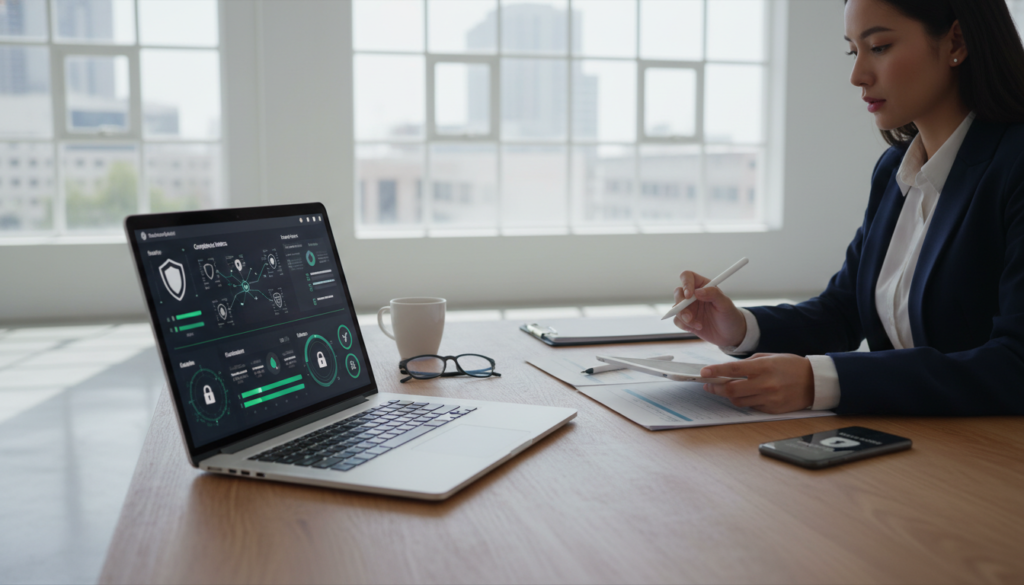
Basic service using your organisation’s off-the-shelf tools
Our Basic tier configures and validates everyday communication tools you already use. We set Teams, FaceTime, Duo or WeChat on laptops, tablets and smartphones.
This option suits simpler processes and supports walkthroughs, interviews and document review without forcing new software. We test connections, permissions and file access before live sessions to keep efficiency high.
Premium service with a dedicated secure platform and smart glasses
The Premium tier uses a dedicated platform to meet stricter requirements. It enables structured capture, annotation and secure transfer of evidence.
Smart glasses extend the auditor’s line of sight. They reduce rework by letting on‑site staff show complex areas live while annotations and geo-data are attached to each file.
Information security, internal policies and secure transfer of audit evidence
Information controls focus on access management, encryption in transit and secure storage. We apply retention rules so evidence and working papers remain defensible.
We align platform choice to internal procedures and business policies. That avoids clashes with existing controls and keeps data and documents traceable, labelled and validated for later queries.
- Minimise tool sprawl and standardise file naming for faster retrieval.
- Label and validate evidence packages to preserve chain of custody.
- Ensure auditors can access required items without repeated requests.
Our remote audit preparation approach and process
A clear, repeatable approach focuses effort where it matters and keeps teams aligned during live reviews.

Audit scoping and risk assessment to focus effort on high-impact areas
Start with a tight scoping exercise that defines sites, systems, time periods and controls in scope. This risk-based process prioritises high-impact areas so teams concentrate effort where the business faces greatest exposure.
Document readiness for financial, internal, compliance and operational audits
Prepare targeted checklists for each audit type. Ensure documents, reconciliations and SOPs are current, approved and indexed for rapid retrieval. Clear owners and version rules speed responses and reduce queries.
Data integrity and traceability using digital validation principles
Timestamped records, immutable trails and controlled edits support authenticity. Use validation rules and consistent metadata so data can be traced from source to response.
Centralised document control and secure sharing to reduce disruption
One source of truth with role-based access prevents uncontrolled forwarding. Secure workflows preserve confidentiality and keep an auditable chain for sensitive information.
Virtual collaboration and “audit war room” set-up for efficient auditor access
A virtual war room groups pre-approved materials and subject-matter experts. Auditors gain efficient access while operations face fewer ad-hoc interruptions.
Audit meeting planning, timeboxing, breaks and cross-team coordination
Use strict agendas, set Q&A windows and schedule short breaks. Timeboxing keeps sessions focused and ensures the right teams are present for each topic.
Audit evidence collection, verification and secure storage
Adopt a repeatable evidence process: label, verify, store and transmit securely. This preserves the chain of custody and supports later verification by auditors.
Team training and rehearsal to improve responsiveness during live audits
Run rehearsals with the same tools and people who will support reviews. Training builds confidence, clarifies escalation routes and smooths responses under pressure.
| Element | Key action | Benefit | Owner |
|---|---|---|---|
| Scoping | Define sites, systems, controls | Focused effort on high-risk areas | Engagement lead |
| Document readiness | Checklist & version control | Faster retrieval, fewer queries | Records owner |
| Data integrity | Timestamps & validation | Proven authenticity | IT/data manager |
| War room | Centralised access & SMEs | Minimal operational disruption | Project lead |
Conclusion
When scope, access and document control are defined, audits run with fewer interruptions; strong,
Structured remote audit preparation supports compliant outcomes by enabling clearer scope, faster evidence retrieval and a smoother end-to-end auditing experience for auditors and internal teams.
The core of any audit remains the same: credible evidence against the agreed scope. Remote delivery raises the bar on planning, secure access and disciplined data handling to meet accreditation and scheme-owner requirements.
For business leaders, the benefits are clear: improved efficiency, less disruption, faster responses and better use of internal expertise across sites. We can help companies select the right delivery model and build a tailored plan.
Request an initial scoping discussion to choose between a basic toolset or a premium platform and align timelines to your risk profile and regulatory requirements.
FAQ
What services does a remote audit preparation Singapore company provide?
How does remote auditing fit into today’s audit landscape in Singapore?
When is a fully virtual assessment appropriate, and when should we use a hybrid model?
What regulatory and accreditation expectations must be met for virtual assessments?
What tools and delivery modes are available for virtual assessments?
How is information security managed when sharing evidence electronically?
How do you scope and assess risk to focus audit effort on high‑impact areas?
What does document readiness involve for financial, compliance and operational reviews?
How is data integrity and traceability maintained in a digital assessment?
What is centralised document control and how does it reduce disruption?
How does virtual collaboration and an “audit war room” improve efficiency?
What best practices exist for audit meeting planning and timeboxing?
How is evidence collected, verified and stored securely during a virtual assessment?
How does team training and rehearsal improve responsiveness during live assessments?
What benefits can organisations expect from adopting virtual assessment practices?
How do providers ensure quality and consistency across multiple audits?
What kind of training or support is provided for internal teams?
How flexible are solutions for different industries and regulatory regimes?

Dean Cheong is a Singapore-based B2B growth strategist and the CEO of VOffice. He helps companies scale revenue through sharper sales execution, CRM implementation, and go-to-market strategy, backed by a strong foundation in business banking and finance from Nanyang Technological University and a track record of driving sustainable, performance-led growth.