

Have you ever wondered why a perfectly planned start-up can stall at the final approval step? Many founders assume a smooth online filing guarantees success. In reality, ACRA checks multiple points and can block an application before incorporation.
Typical checkpoints include the proposed name, filing details and licence clearance. A non-compliant company name or a missing local address often halts progress. Gaps in shareholder or director eligibility are common too.
Most rejections are administrative and fixable. Amend the form, provide supporting documents, or secure the necessary licence and you can move on. Getting the business name right matters beyond approval; similar names cause confusion and future disputes.
This article offers a practical, step‑by‑step list to reduce delays and guide you from application to incorporation. If you use professional services, still familiarise yourself with the checks so you can resolve issues fast.
Key Takeaways
- Most refusals happen at name, address or licence checks and are correctable.
- Choose a distinct company name to avoid disputes later.
- Ensure a qualifying local director and eligible shareholders before filing.
- Keep all application fields consistent and upload required documents promptly.
- Professional assistance helps, but founders should know the main pitfalls.
Why ACRA rejects applications and what “rejection” means in the registration process
A submission can fail at the portal stage if key facts or approvals are not in order. In ACRA’s system a “rejection” means the filing does not meet a required condition, so it cannot proceed until corrected. It is not a permanent ban.
Where rejection typically happens
- Name approval — problems arise before you file if the proposed name conflicts with existing names or policy rules.
- Incorporation filing — errors in entity details, appointments or addresses stop the process.
- Licence clearance — regulated activities often need prior approvals or evidence of licences to move forward.
ACRA may decline an application when information is inconsistent, incomplete, or fails statutory requirements such as address rules, director eligibility and shareholder constraints.
How to prevent delays — pre‑check the proposed name, confirm the registered office, validate share structures and secure a qualifying local director before submission. A short pre‑submission checklist or a corporate service provider reduces rework and speeds incorporation.

Reasons company registration rejected singapore: the most common ACRA triggers to watch for
Small compliance gaps at name approval often stop an application before it reaches incorporation.
Top triggers founders meet, in order:
- Non‑compliant name — identical or confusingly similar names, restricted or misleading terms, offensive words, or a name already reserved by another filer can fail the name check.
- No registered address — the registered office must be a real, physical Singapore address. PO Boxes or inaccessible locations do not meet the Companies Act standard.
- Shareholder issues — the entity type must match the shareholder mix. Exempt private and private limited rules differ on numbers and types of shareholders.
- No qualifying local director — at least one local director is required at filing and they must not be disqualified under law.
- Missing licence for SSIC activities — regulated business activities tied to SSIC codes often need pre‑approval or licence evidence before approval.
Each trigger is preventable with a short checklist and correct supporting documents. Simple pre‑checks reduce delays and avoid repeated applications.
| Trigger | Typical fault | Quick fix |
|---|---|---|
| Name | Too similar, reserved, or restricted wording | Choose a distinct name; verify search results and restrictions |
| Address | PO Box or non‑physical address | Provide a physical registered office that meets accessibility rules |
| Shareholders | Wrong number/type for entity | Confirm entity type then update shareholder details and declarations |
| Director | No local or disqualified director named | Appoint a qualifying local director before filing |
| Licences (SSIC) | Regulated activity without permit evidence | Secure licence or clearance and attach proof to the application |

Non-compliant company name issues ACRA flags during name application
A name that looks fine at first can still fail when ACRA tests it against existing filings and policy rules.
Identical versus similar names
Identical means the exact wording already exists and will be refused. Similar covers near matches that cause likely confusion, especially when the businesses have related activities.
How ACRA compares names
ACRA strips out common descriptors and focuses on the distinctive parts of a title. Adding generic endings rarely changes the outcome when the key term remains the same.
Disregarded words and sensitive terms
Words such as Group, International or Holdings are often disregarded in comparisons. That means two business names can still clash even if one adds those descriptors.

| Issue | What ACRA looks for | Practical step |
|---|---|---|
| Identical or too similar | High confusion risk in same business activities | Choose a distinct company name; check searches before filing |
| Restricted words | Terms implying finance, education or regulated sectors | Obtain approvals or avoid the term |
| Offensive or religious | Objectionable meaning or sensitive connotations | Pick a neutral business name |
| Government implication | Names suggesting state links | Reword to remove any official reference |
| Reservation timing | Name held up to 60 days; others may reserve it first | Reserve and proceed quickly to incorporation; see register company name |
No registered Singapore office address or an address that fails Companies Act requirements
Many filings stall because the declared office cannot receive official notices or lacks a physical presence.
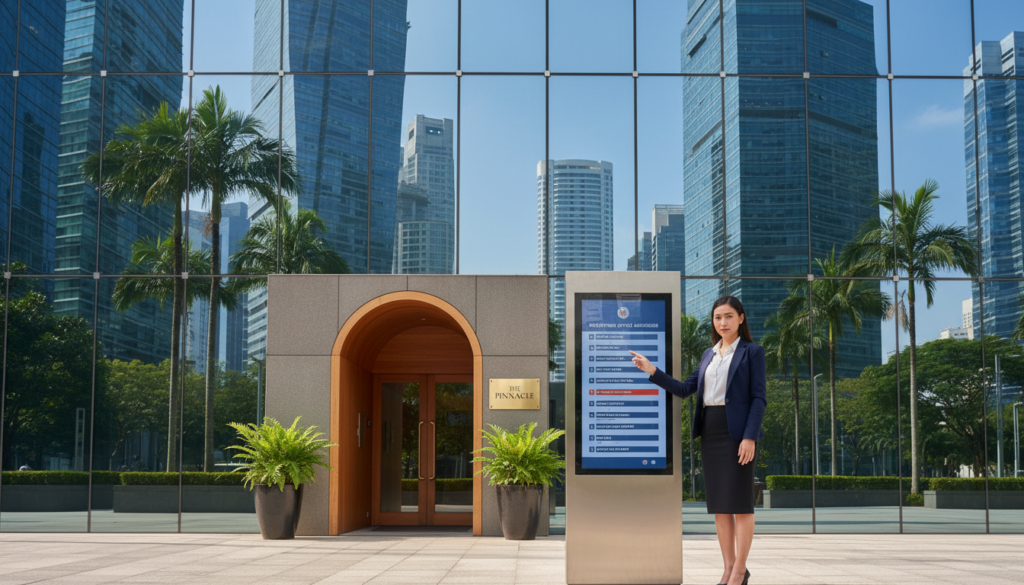
Legal baseline: Section 142(1) of the Companies Act requires every company to maintain a verifiable registered office in Singapore. ACRA expects a physical address — PO Boxes are not acceptable — and it must be contactable for official notices.
Common address problems
ACRA frequently flags PO Boxes, locations without real premises and addresses that cannot accept notices. These faults stop the application until a correct office address is supplied.
Accessibility and operational risk
The registered office must be open and accessible to the public for at least three hours on each business day. Poor mail handling risks missed statutory reminders, banking letters and time‑sensitive notices.
Home address and virtual office options
Using a home address under the URA/HDB Home Office Scheme is allowed, but the address becomes public. A virtual office can protect privacy if it provides reliable mail receipt and prompt forwarding.
2024 contact address update
From 2024 the contact address regime changes public‑facing details for officers. PO Boxes remain disallowed and official correspondence may still route to residential addresses. For practical help with an ACRA address issue see ACRA rejection guidance.
Shareholder structure mistakes that can block incorporation
A mismatch between your intended ownership and the chosen entity type often halts incorporation.
Private Limited Company fundamentals
At least one shareholder is required and a private limited company may have up to 50 shareholders. Shareholders can be individuals or corporate bodies, local or foreign.
Either an individual or a corporate entity may hold 100% of the shares. Ensure the declared shareholder mix matches this flexibility before you file the application.
Exempt Private Limited Company constraints
Exempt private limited companies are stricter. They allow a maximum of 20 shareholders and all must be individuals.
Corporate shareholders cannot hold shares directly or indirectly in an exempt setup. If a holding group or investment vehicle will own equity, this entity type is usually unsuitable.
Declaration accuracy and practical checks
ACRA expects precise details: individual versus corporate shareholders must be declared correctly and supported with consistent documents.
- Confirm the total shareholder count meets the chosen entity limits.
- Verify whether any shareholder is a corporate entity; that affects eligibility.
- Match your ownership roadmap to the limited company type before submission.
Absence of a qualifying local director at the point of application
Filings stall quickly when no qualifying local director is named at the point of submission. ACRA requires at least one local director at filing, and applications will fail if that appointment is missing or the appointee is ineligible.
Who counts as local
Local means a Singapore Citizen or Permanent Resident. Employment Pass or EntrePass holders may qualify, but timing matters. In practice, an EP‑holder often cannot be appointed until after incorporation.
Eligibility basics
Ensure the director is at least 18, has full legal capacity and is not disqualified under the rules. Missing any of these checks can invalidate the appointment and stop the application.
Practical solutions and nominee services
Many founders use a nominee director service to meet the at least one local director requirement during filing. Treat nominee arrangements as a temporary, risk‑managed step.
- Use clear written agreements that spell out duties and handover timing.
- Plan the transition when the founder becomes eligible to serve locally.
- Verify the nominee’s identity and compliance status before listing them on the form.
Timing and post‑incorporation compliance
Be aware that after incorporation you must appoint a company secretary within six months. Line up that service early to avoid downstream compliance breaches and to keep statutory records current.
| Issue | Quick check | Fix |
|---|---|---|
| No local director | Was a Citizen or PR listed? | Appoint a qualified local or use nominee services |
| EP timing | Can the EP holder be appointed pre‑incorporation? | Use a temporary local director; update after incorporation |
| Eligibility | Age, capacity, disqualification checked? | Confirm documents and statutory declarations |
Missing business licence or incorrect SSIC code for regulated business activities
Selecting the wrong SSIC code can trigger checks that stop your filing and create avoidable delays.
Why SSIC codes matter
The SSIC code links your declared activities to sector regulators. It tells authorities what your business will do and whether a licence or clearance may be needed.
How licences and SSICs interact
If an SSIC indicates a regulated activity, ACRA or the relevant agency may require proof of a permit before approving the application. A missing licence can therefore lead to a refusal at the filing stage.
Common triggers and sensitive terms
Using restricted words in a name — for example, “bank”, “insurance”, “finance” or “school” — draws extra scrutiny. Those terms often need formal approvals to avoid misleading the public.
What to prepare before filing
- Confirm the correct SSIC code(s) that match your stated activities.
- Gather licence or approval documents and attach them where required.
- Ensure the activity description, chosen code and proposed name are consistent across the form.
- Plan not to commence any regulated activity until you hold the necessary permits.
| Issue | Why it matters | Risk | Fix |
|---|---|---|---|
| Incorrect SSIC | Misrepresents business activities | Queries, delays or refusal | Check official SSIC lists and match descriptions |
| Missing licence | Activity flagged as regulated | Application held pending clearance | Obtain licence or pre‑clearance and attach proof |
| Restricted terms in name | Suggests regulated sector involvement | Extra approvals required | Remove the term or secure prior approvals |
| Inconsistent activity description | Triggers manual checks | Follow‑up requests; slower processing | Make descriptions align with chosen SSIC codes |
Conclusion
A short compliance check often separates a smooth incorporation from a returned application.
Recap: most refusals stem from a non‑distinct name, an address that fails Section 142(1), incorrect shareholder limits for the chosen entity, no qualifying local director, or missing licences linked to SSIC codes.
Assume tighter scrutiny on name similarity in 2024 and pick a truly distinctive title. If an application is rejected, identify the precise fault, fix that field and refile rather than guessing changes.
A reliable corporate services provider can streamline the process and align documents, but founders should still know the basics to make informed choices.
Final note: successful registration is only the start—maintain your registered address, key appointments and licence compliance to protect long‑term operations in this country.
FAQ
Why does ACRA reject a name application and what does “rejection” mean in the registration process?
Where in the timeline do most applications fail: name approval, incorporation filing, or licence clearance?
Can most refusals be avoided with pre-checks and accurate details?
What are the most common ACRA triggers to watch for during incorporation?
How does ACRA treat identical versus similar names when assessing confusion risk?
Which words might ACRA disregard when comparing names, and why can names still fail?
What kinds of words or connotations lead to name refusal?
When will a name be refused for suggesting government linkage or falling under Ministry of Finance guidance?
How does name reservation timing cause collisions with another applicant?
Have name guidelines tightened in recent years and what does that mean for applicants?
What does Section 142(1) of the Companies Act require for a registered office?
What address types commonly cause problems with ACRA?
What are the minimum public access expectations for a registered office?
Can I use my home address and what are the privacy implications?
Are virtual offices acceptable and what should I watch for?
What recent updates to contact-address rules affect public-facing company details?
What are the shareholder rules that can block incorporation for a private limited company?
What does ACRA expect when declaring individual versus corporate shareholders?
Who qualifies as a local director at the point of application?
What basic eligibility checks does ACRA perform on directors?
Are nominee director arrangements a practical solution if I lack a local director?
Is there a deadline to appoint a company secretary after incorporation?
Why do SSIC codes and business licences matter during filing?
Which sectors commonly trigger the need for additional approvals?
What documents should I prepare before filing to avoid licence-related refusals?

Dean Cheong is a Singapore-based B2B growth strategist and the CEO of VOffice. He helps companies scale revenue through sharper sales execution, CRM implementation, and go-to-market strategy, backed by a strong foundation in business banking and finance from Nanyang Technological University and a track record of driving sustainable, performance-led growth.