
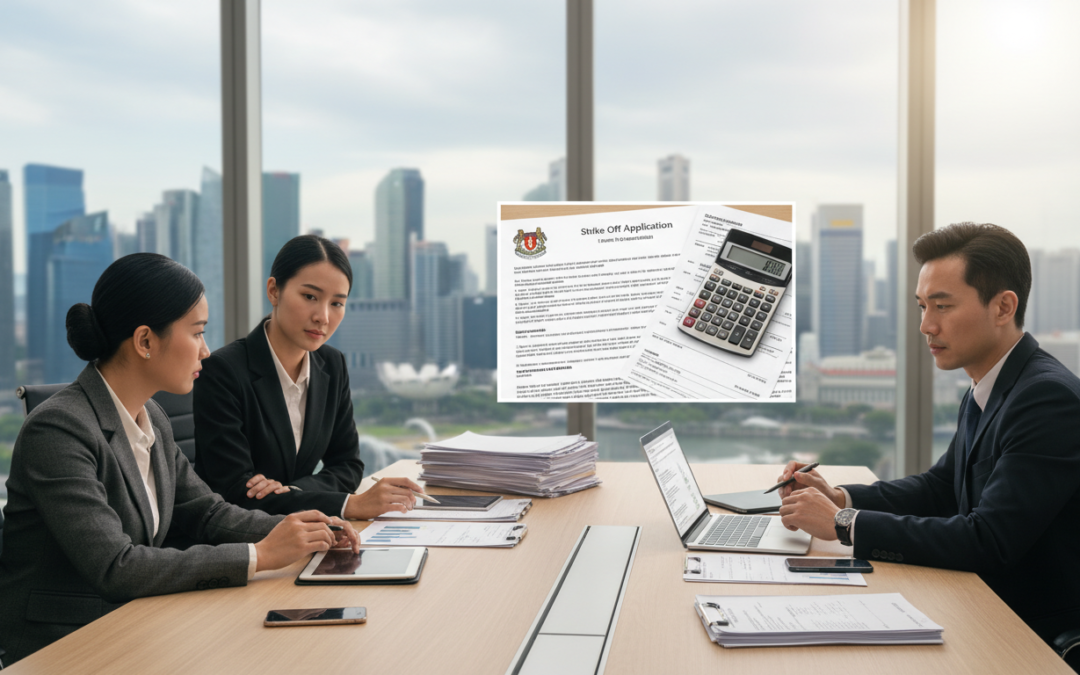
Could closing a dormant firm be quicker than you think? This guide shows a practical, Singapore-focused how-to on removing a name from the Register when there is reasonable cause to believe the business is not operating.
Who is this for? Directors and owners of a Singapore-incorporated company that is dormant or has stopped trading and seeks a cost-effective closure route.
This is a compliance-led administrative closure, not a solution for unresolved debts. Unsettled liabilities, tax liabilities or disputes often derail an application, so clean-up is essential before submission.
We outline clear steps: confirm eligibility, tidy pre-application matters, prepare documents, submit via BizFile+, handle reviews and objections, then monitor milestones until removal from the registry. Timelines are measured in months and depend on how swiftly queries from ACRA or IRAS are addressed.
The article also covers alternatives such as voluntary winding up and SIP 2.0 when removal by strike off is unsuitable, and encourages checking current regulations before you apply.
Key Takeaways
- Removal is a regulatory route for dormant firms, not a debt remedy.
- Eligibility checks and pre-application clean-up are vital to success.
- Submit your application via BizFile+ and expect reviews that may take months.
- Unresolved tax or creditor issues commonly delay or block approval.
- Consider winding up or SIP 2.0 if the registry route is unsuitable.
What it means to strike off a company in Singapore
Removing a name from the Register ends the firm’s legal life and stops routine compliance duties.
Removal from ACRA’s register and being “dissolved”
The name is deleted from ACRA’s register and the entity is treated as dissolved. That means the legal person no longer exists for new contracts, billing or other business acts.
Practical effects for directors and stakeholders
A director must not continue trading or enter fresh commitments once closure steps begin. Stakeholders lose the company’s legal capacity to sue, be sued or hold assets under that legal identity.

When this route is cost-effective
This route suits companies that have ceased operations cleanly, hold no assets or liabilities and face no creditor claims. It avoids liquidator fees and formal winding-up costs.
- Dormant vs removed: Dormant firms still carry filing obligations. Leaving them idle raises compliance risk and possible penalties.
- Tax and GST: IRAS clearance and cancelling GST registration are often required if the business has stopped trading.
- Unsuitable cases: Ongoing disputes, unpaid debts or regulatory actions usually require winding up instead.
Decision checklist: confirm the company ceased activity, verify a clean balance sheet, clear regulatory matters, then prepare to apply. For official steps and criteria, see the ACRA guidance.
Strike off company in singapore process eligibility checklist
Begin with a clear self-assessment: does the business satisfy all of ACRA’s qualifying conditions?
Key checklist
- Not commenced or ceased trading: no sales, services, invoicing or revenue in Singapore or abroad; no ongoing commercial commitments.
- No assets or liabilities: the ledger shows nil balances, including contingent items such as deposits, prepaid expenses or intercompany amounts.
- No outstanding debts: private creditors and government bodies (IRAS/CPF) are fully settled.
- No charges in the register: secured borrowings or mortgages must be removed.
- No legal proceedings or regulatory action: no ongoing or pending investigations, suits or disciplinary matters.
- Governance and authorisation: written consent from shareholders and directors, and a director must authorise the applicant to submit on the company’s behalf.
If one item fails, do not press ahead. Address the issue or consider the alternatives later in this guide rather than risking a rejected application.

Pre-application clean-up to avoid rejection or delays
A careful pre-application tidy-up cuts the chance of queries and speeds approval. Spend time clearing financial and regulatory items before you submit. That makes reviews by authorities straightforward.

Settle tax and GST obligations
Resolve all corporate tax matters with IRAS. Settle assessments and file outstanding returns. If the business is GST-registered, cancel GST registration before you apply.
Clear CPF and government payables
Confirm there are no CPF arrears, penalties, fines or other government amounts due. Any outstanding debts can trigger an objection and halt removal.
Assets, bank accounts and zero‑rise accounts
Dispose of or properly transfer assets so the accounts show nil balances. Prepare internal closing accounts that demonstrate no assets and no liabilities — a true “zero‑rise” position.
Close every corporate bank account, including PayNow-linked or multi‑currency accounts, and retain final statements as evidence. Stop all trading, invoicing and revenue activity after the cut‑off date.
Checklist reminder: keep accounting and statutory records for at least five years and review the terms and conditions for document retention expectations.
Documents and supporting evidence to prepare
A clear, well‑organised evidence pack can determine whether an application sails through or stalls. Gather the core documents early to meet statutory requirements and to answer questions from registry or tax reviewers.
Core documents to collect
- Board and members’ approval: written resolutions or minutes showing the decision to close, confirmation the company has ceased business, and authorisation for the applicant or director to act.
- Financial records: the last set of financial statements where ACRA’s dormancy rules do not apply.
- Corporate tax: the last filing or Form C‑S/Form C waiver documents where IRAS permits a waiver. Include any GST de‑registration evidence if relevant.
Practical evidence pack
Include management accounts, bank closure statements and formal confirmations that there are no assets or liabilities as at the relevant date. These items help prove a nil position and support the application.
Declarations and record keeping
Prepare signed declarations that confirm solvency and no pending matters. Keep copies of all documents and filings for at least five years after the date of dissolution for statutory retention.

“Accurate paperwork reduces the risk of objections and speeds finalisation.”
How to submit the strike-off application via ACRA
Before logging into BizFile+, make sure every authorised signature and record is finalised.
The online application is filed via BizFile+. Accuracy matters: mismatched identifiers or missing approvals are frequent causes of delay.
Applying online and key details to check
Enter the correct entity number, registered name and the date when trading ceased. Confirm the declarations about assets and liabilities match your final statements.
Provide a clear contact for notices and follow-ups. Small typos in contact details can stall the review.
Role of the secretary and authorised filing
The company secretary organises board and member approvals, prepares the documents and keeps statutory records aligned. The secretary often coordinates the signing and upload.
Only an authorised person may file on behalf of the company. Directors must pass written approval that names the applicant and permits submission.
“Good records and swift responses to queries reduce review time and risk of objections.”
What happens after submission: ACRA and IRAS review, notices, and objections
Once filed, regulators assess whether there is sufficient evidence that the firm is no longer active. Reviews focus on documentary proof and whether eligibility criteria remain satisfied under the Companies Act.
ACRA’s assessment of reasonable cause
ACRA checks whether there is reasonable cause to believe the business is not carrying on. That includes comparing final accounts, bank closure statements and declarations against records submitted at the application date.
Public notification and gazette publication
After preliminary approval, a public notice is published and a gazette entry follows. This notice creates a 60‑day window for stakeholders to raise concerns.
How objections arise and common reasons for halts
Objections come from IRAS, CPF, other government bodies, creditors or third parties who believe obligations remain. Typical causes of an objection are:
- outstanding tax or GST matters;
- late or missing filings;
- open bank accounts that imply ongoing business;
- undisposed assets or unresolved legal proceedings.
Handling IRAS clearance and outstanding filing issues
IRAS clearance often requires final tax assessments and proof of nil tax liability. Promptly supplying evidence — final tax returns, clearance letters, or bank statements — reduces delays measured in months.
“Quick, well-documented responses are the best defence against objections and extended review periods.”
| Stage | Typical action | Who may object | Expected delay |
|---|---|---|---|
| Initial review | Verification of documents and eligiblity | ACRA | 2–4 weeks |
| Public notice | Gazette publication and 60‑day window | Public, government agencies | ~60 days |
| IRAS clearance | Final tax checks and clearance letter | IRAS | Weeks to months (if queries) |
| Final determination | Approval or rejection; possible reinstatement steps | ACRA / Courts (if contested) | Several months overall |
Timeline, status monitoring, and key milestones in Singapore
Expect patience: removal often takes several months even for a clean case.
Typical duration
Most applications need at least 3–4 months from filing to finalisation. A common range is 4–6 months when you factor in regulator reviews and the public notice period.
Key milestones
- Submission date — the application and supporting evidence are lodged.
- Initial assessment — ACRA and IRAS check documents and financials; this can take weeks.
- Public notice period — a formal notice is published and a 60‑day window opens for any objection.
- Final confirmation — after the notice period and any clearances, the registry confirms the removal.
What extends the timeline
IRAS follow‑ups, unresolved tax items, late filings, objections or inconsistent evidence that a business ceased are the main causes of delay.
How to track status and respond
Check BizFile+ for application status updates and watch email and the registered contact closely for any notice. When authorities request information, assign a single member of the team to handle replies and aim to respond promptly with bank statements, final returns or signed declarations.
“Quick, well-documented replies cut the chance of extended review periods.”
Outcomes and alternatives if striking off is not suitable
If the registry route is unsuitable, choose a path that protects creditors, directors and shareholders while addressing tax and statutory duties.
There are three possible outcomes for an application: it proceeds to completion, it is paused due to an objection, or it is withdrawn because new information arises.
The application may be withdrawn before the entity is struck off under the Companies Act s344B(1).
If withdrawal occurs, ACRA will notify the business and publish a formal notice of the update.
Reinstatement and Court Orders
If a company struck off is later required for legal or commercial reasons, reinstatement normally needs a court order.
This step is not an administrative reversal; it involves court filings and may include costs and time.
Members’ voluntary winding up
Suitable for solvent entities where directors believe all debts can be paid within 12 months.
This route appoints a liquidator and follows formal steps to distribute any remaining assets to shareholders.
Creditors’ voluntary and compulsory winding up
Where liabilities exceed assets or debts cannot be met, creditors’ voluntary winding up or a compulsory winding up via the courts is appropriate.
The court may appoint a liquidator or Official Receiver to manage realisations and creditor claims.
Simplified Insolvency Programme 2.0 (from 29 January 2026)
SIP 2.0 offers streamlined options for eligible firms with total liabilities up to S$2 million.
It includes the Simplified Winding Up Programme (SWUP) and the Simplified Debt Restructuring Programme (SDRP), both run by licensed insolvency practitioners.
“Choose the alternative that matches the company’s financial reality—unresolved tax, active proceedings or material debts usually rule out an administrative removal.”
- Withdraw the application quickly if new liabilities or disputes emerge before the date the entity is struck off.
- Seek a court order if reinstatement is required after a company struck off.
- Prefer members’ voluntary winding up for solvent cases; use creditors’ or compulsory winding up where debts cannot be paid.
- Consider SIP 2.0 for small debt profiles as an efficient, regulated route.
Conclusion
Preparing accurate paperwork and finalising tax matters prevents the most common delays. The strike‑off route suits a firm that has ceased business, shows no assets or liabilities, and is up to date on filing and tax obligations.
Do it properly: incomplete clean‑up, inconsistent declarations and missed authority notices cause most objections and delays. Run the eligibility checklist, complete pre‑application tidy‑up and assemble clear documentary evidence before you submit on the given date.
Keep statutory records for at least five years and check for lingering compliance risks. Non‑compliance can attract composition sums (ACRA and IRAS) and escalating enforcement that may affect directors.
If uncertain, consult a company secretary or qualified corporate services team to confirm the right route under the Companies Act. Choose the registry route for clean dormant closures; use winding up or SIP 2.0 where liabilities, debts or disputes make that route unsuitable.
FAQ
What does it mean to have a company removed from ACRA’s register and be dissolved?
When is removal the most cost-effective closure route for a dormant business?
What eligibility criteria must be met before applying to remove a company?
What tax and statutory checks should be done before submitting an application?
Which company accounts and bank steps are advisable before applying?
What documents and evidence are typically required to support an application?
How is the application submitted through BizFile+ and who usually coordinates it?
How do ACRA and IRAS assess an application after submission?
What public notification and objection processes occur after filing?
What are the common reasons an application is halted or rejected?
How long does the removal procedure usually take and what can extend the timeline?
How can applicants monitor application status and respond to enquiries?
What happens if the application is withdrawn before finalisation?
Can a company be reinstated after removal and what is required?
What alternatives exist if removal is unsuitable because of outstanding liabilities?
Who bears responsibility for outstanding debts and compliance before removal?
What practical steps should a team take to prepare for a smooth application?

Dean Cheong is a Singapore-based B2B growth strategist and the CEO of VOffice. He helps companies scale revenue through sharper sales execution, CRM implementation, and go-to-market strategy, backed by a strong foundation in business banking and finance from Nanyang Technological University and a track record of driving sustainable, performance-led growth.