

Curious: could a few missed steps turn a routine tax change into a costly compliance headache?
This guide helps owners and finance managers move from eligibility checks to the final filing with clarity and confidence.
Applications to cancel GST are often approved the same day, though some take 1–10 working days. From the effective cancellation date you must not charge or collect GST, and you must keep business records for at least five years from the transaction date.
Successful means IRAS approval received, an effective cancellation date confirmed, final returns filed and paid, and post-approval operations adjusted so you do not issue tax invoices after that date.
Before you start, ensure access to myTax Portal, clear visibility of turnover and invoices, and a plan for the last return. Watch out for common pitfalls such as assuming ACRA closure cancels registration or missing the “last day registration” rule.
Key Takeaways
- Get IRAS approval and a confirmed cancellation date to stop charging GST legally.
- Prepare myTax Portal access, turnover figures and invoices before you apply.
- File the final return and keep business records for at least five years.
- Cancel within required timelines to avoid penalties and compliance issues.
- Do not assume ACRA closure cancels tax registration; follow the formal steps.
Understanding GST deregistration in Singapore and why it matters</h2>
What it means to cancel gst registration with IRAS
When IRAS approves a cancellation, your gst registration number is no longer valid from the effective date. This means you must stop charging tax and you cannot issue tax invoices after that day.
How the status change differs from operational steps
Deregistration is the formal status change on IRAS records. Operational tasks — updating prices, invoices and accounting — are actions you must take to remain compliant.
Immediate and ongoing effects
From the effective cancellation date you must stop charging GST and stop issuing tax invoices. Before that date you still charge GST and file gst returns up to the last day of registration, including nil returns if there are no transactions.
- Input tax claims generally end after cancellation, so review purchases before you apply.
- Plan customer communications and pricing changes to avoid billing errors.
- Consider strategic impacts: reduced compliance may lower costs, but losing tax invoices can affect B2B buyers.
“Once the approval is in place, the legal right to charge GST ends on the effective date.”
When you must cancel GST registration and the deadlines IRAS enforces</h2>
You must notify IRAS within 30 days when your business stops making taxable supplies and you do not intend to resume.
Compulsory scenarios where cancellation is required include stopping taxable sales, ceasing operations, transferring the business as a whole, or changing the entity form (for example, sole‑proprietorship to private limited company).
Practical meaning of stopped sales
“Stopped making taxable supplies” means there are no taxable transactions now and no plan to start again. A quiet month or seasonal lull does not meet this test.
Transfers, cessation and entity changes
When a business is transferred as a whole, the buyer must assess whether they need to register. If the legal form changes, the old gst registration ends and the new company must decide on registration separately.
The 30‑day rule and penalties
Apply within 30 days of the triggering event. Missing this timeframe can lead to penalties and compliance enquiries. Do not assume ACRA/BizFile+ updates complete the IRAS step; owners should actively cancel gst registration if required.

| Scenario | Trigger | Operational change | Action timeframe |
|---|---|---|---|
| Stopped making taxable supplies | No taxable sales, no intent to resume | Stop charging tax; final returns | Apply within 30 days |
| Business ceased | Closure of operations | Settle creditors; file final accounts | Apply within 30 days |
| Transferred as a whole | Sale of business to buyer | Buyer evaluates registration need | Apply within 30 days |
| Entity form changed | e.g., sole‑proprietor to Pte Ltd | Old registration ends; new entity may register | Apply within 30 days |
Voluntary cancellation when you are no longer liable for GST registration</h2>
If your business no longer meets the threshold for gst registration, you can apply to cancel voluntarily.
When this is available: Voluntary deregistration is appropriate where the current and projected taxable turnover shows you will not be liable to remain registered. Use a defensible projection for the next 12 months rather than a hopeful estimate.
Taxable turnover tests and projecting the next 12 months
Assess historical turnover and build a clear forecast tied to contracts, invoices and pipeline data. Be certain your taxable turnover for the coming 12 months will be S$1 million or less due to specific, verifiable events.
The two-year lock-in period for voluntary registration
Note: If you registered voluntarily, you must usually remain registered for at least two years before you may submit an application to cancel.
Supporting documents to substantiate turnover reduction
- Customer contract termination letters and signed settlement agreements.
- Management accounts, sales pipeline reports and revised forecasts.
- Downsizing plans, lease terminations and evidence of cancelled orders.
Practical point: Voluntary cancellation can cut compliance, but you cannot issue GST invoices or claim input tax after the effective date—factor this into your decision.
Before you apply: information and records to prepare</h2>
Prepare a concise pack of financial records, asset listings and supply schedules to avoid delays with the final return.
Confirm filing frequency and prescribed accounting period
Check whether you file monthly or quarterly. This determines the prescribed accounting period shown on the final GST F8 return.
The final return covers activity up to the last day of registration and must be submitted within one month from the period end.
List taxable supplies, outstanding invoices and payment timings
Map supplies by delivery date, invoice date and payment date. Goods delivered before cancellation but invoiced later may still appear in the return.
- Issued-but-unpaid invoices
- Unbilled work and deposits received
- Credit notes expected after the last day
Compile business assets and inventory for market value review
Make a detailed list of fixed assets, non-residential property and unsold inventory. Note condition and approximate age for valuation.
Open market value means the price a similar asset in similar condition would fetch today—not the historic purchase cost.
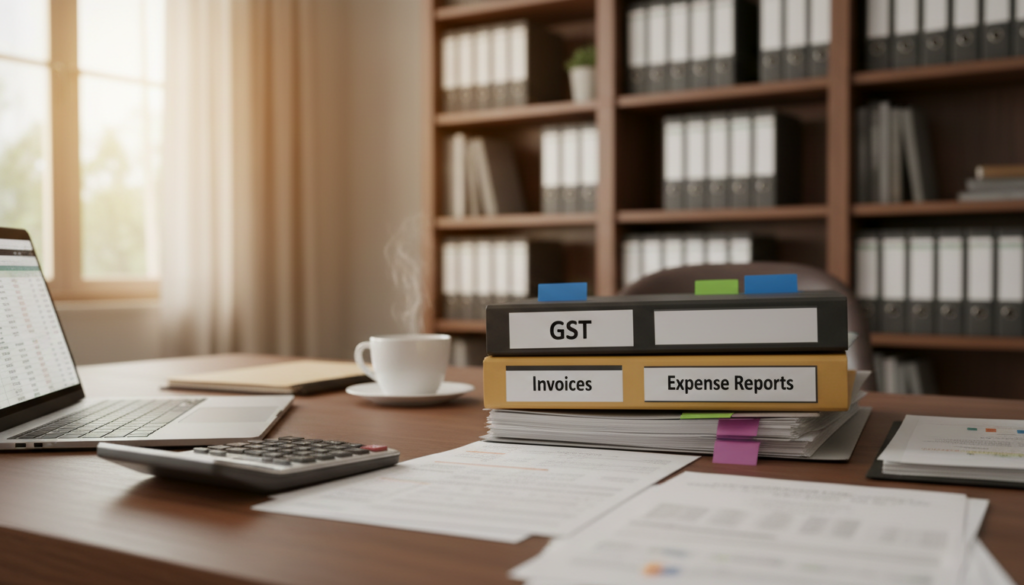
| Task | What to gather | Why it matters | Deadline |
|---|---|---|---|
| Confirm filing frequency | myTax Portal notice, past gst returns | Determines final prescribed accounting period | Before application |
| Map supplies & invoices | Invoices, delivery notes, receipts | Shows what to report on the final return | Before preparing final return |
| Asset valuation | Asset list, photos, valuations | May trigger output tax based on market value | At time of application |
| Record-keeping | All transactional records | Keep for at least five years for compliance checks | Post-approval and ongoing |
Keep accurate records for at least five years from each transaction date so the business can answer any authority queries after the effective date.
How to submit the gst deregistration singapore process application via myTax Portal</h2>
Begin online using the authorised account. The person who normally submits your gst returns and has mytax portal access should log in to mytax.iras.gov.sg to start the application.
Who should apply
The authorised submitter is typically the finance lead or a nominated tax officer. They must have permission to file returns and view gst registration details.
What you will provide
Complete the online form with the business details, effective date and reason for cancellation — cessation, transfer, restructure or not liable. Attach turnover forecasts if the application is voluntary.
Timelines and common delays
Most applications are approved the same day, but some require further checks and can take 1 to 10 working days. Delays usually stem from incomplete turnover evidence, unclear dates or missing returns.
Note: You remain registered until IRAS confirms approval and an effective cancellation date. For official guidance, see cancel GST registration.
Effective date of cancellation, last day of registration and what you must do until then</h2>
The approval email will state the effective date; plan operational changes around that exact calendar day. This date is the legal cut‑off when your registration ends and you must stop charging tax from that day.

Understanding the “last day registration” rule
The last day of registration is one day before the effective date. That single last day is the final day you may charge GST and issue tax invoices.
In practice: deliveries or services performed on the last day registration must follow normal tax rules. Do not assume the effective date and the last day are the same.
Continuing obligations until the final day
You must keep meeting all obligations up to the last day. Continue charging GST on standard-rated supplies and issue compliant tax invoices.
File all outstanding returns, including the final gst return that covers activity to the last day registration. File nil returns if no transactions occur to avoid penalties.
- Check invoicing: match delivery, invoice and payment dates to avoid cross‑date errors.
- Coordinate teams: finance, sales and operations must agree a cutover plan.
- Keep records: retain transactions and supporting documents for the statutory period.
“Treat the notified effective date as the firm switch‑off for charging and billing.”
After approval: immediate operational changes to stay compliant</h2>
Once your cancellation is approved, act at once to align operations with the effective date. Small oversights can create legal exposure, so follow the steps below without delay.
Stop charging or collecting GST from the effective date
From the effective cancellation date you must not charge or collect GST. Continuing to do so is an offence. Update tills and billing routines so no tax is added after that day.
Stop issuing tax invoices and update pre-printed templates
Do not issue tax invoices after the cut-off. For any pre-printed templates add “GST cancelled with effect from (date)”, strike out the registration number and remove the words “Tax Invoice”.
Update pricing, website listings and accounting software
Change price displays, product pages and quotations to show non-taxed amounts. Reconfigure accounting and point-of-sale tax settings so calculations stop automatically.
Customer communications and contract handling
Tell staff how to explain the pricing change and whether amounts are now GST‑inclusive or not. Review contracts that span the effective date to confirm which supplies fall before or after cancellation.
eTRS and import implications
If you operated the Tourist Refund Scheme, notify the Central Refund Agency and stop eTRS transactions from the effective date.
After cancellation, imports attract tax payable to Customs and you lose eligibility for import-related schemes such as MES and IGDS. Adjust cash‑flow forecasts to reflect these changes.
Practical tip: Keep clear records of every action taken on the effective date to answer any future queries.
Filing your final GST return (GST F8) correctly and on time
The closing GST F8 form records taxable activity up to the last day of registration. It is issued after approval and is your final statement of supplies, assets and any tax due.
Deadline: submit the final gst return within one month from the end of the prescribed accounting period shown on the form. Plan internal close procedures so reconciliations finish before that period end.
Clear all outstanding returns and make any outstanding payment before closure. Unsettled returns can trigger queries and delay closure of your tax file.
The final gst differs from a regular return because it requires details of business assets held on the last day and supplies that were delivered before cancellation but invoiced or paid after. Treat asset values and timing carefully.

As a simple timing example: if the effective date falls on the first day of a month, the F8 will often cover up to the last day of the prior month, depending on your filing frequency.
- Reconcile: compare sales ledgers, GST control accounts and outstanding invoices.
- Confirm figures: ensure the return and payments match bookkeeping before submission.
“Accurate reconciliation before you submit prevents follow-up enquiries and penalties.”
Final GST F8 adjustments: output tax, input tax and business assets at market value</h2>
The final return requires careful review of remaining assets and any output tax due on their open market value. Treat valuations as current market estimates, not historic cost.
Core adjustment: on the last day you may need to account for output tax on business assets you still hold. Use open market value to calculate taxable value, not the book value.
Thresholds, assets and input tax conditions
If the total open market value of relevant assets exceeds S$10,000, output tax is due where input tax was claimed. Goods imported under suspension schemes are treated as if input tax was claimed.
Reporting and timing
Report the asset value as standard-rated supplies in Box 1 of the form and the corresponding output tax in Box 6. Also account for supplies delivered before the effective date but invoiced or paid after; report the remaining value in the final gst return.
| Issue | What to include | Exception | Where to report |
|---|---|---|---|
| Non‑residential property | Open market value | Going concern transfer to registered buyer | Box 1 / Box 6 |
| Fixed assets | Market value if input tax claimed | Total value ≤ S$10,000 | Box 1 / Box 6 |
| Unsold inventory | Closing stock value | De minimis threshold applies | Box 1 / Box 6 |
“Keep valuation evidence, inventory counts and asset registers to support the numbers in the final return.”
Business transfers and restructures: avoiding errors when ownership or entity type changes</h2>
Transfers of ownership and structural changes often create timing gaps that trip up even experienced finance teams. Multiple moving parts — legal title, invoice responsibility and registration identity — must align on the cut‑over date.
Transferring a business as a going concern and asset treatment
If the whole business transfers as a going concern to a buyer who is registered for gst, output tax on remaining assets may not apply. Confirm the buyer’s gst registration and record the sale terms clearly so the exception is defensible.
Entity conversion and ACRA versus IRAS responsibilities
When a sole trader becomes a private company, the old registration usually stops and the new company must assess whether to register. Closing your entity on BizFile+ does not automatically end your registration with IRAS; you must complete the cancellation steps separately.
- Why errors occur: unclear ownership of supplies or assets on the effective date.
- Document discipline: keep contracts, asset lists and buyer registration evidence.
- Timeframe: apply for cancellation within 30 days of the triggering change to reduce compliance risk.
“Record the transfer date, buyer registration status and asset schedules to support the tax position.”
Conclusion</h2>
Wrap up by naming an internal lead to drive the final reconciliations, filings and asset checks.
Confirm whether cancellation is compulsory or voluntary, prepare turnover, invoices and asset valuations, and submit via myTax Portal. Do not charge or collect GST after the effective cancellation date, and stop issuing tax invoices once the approval takes effect.
The closing form, the final GST return (GST F8), must be filed within one month from the end of the prescribed accounting period and includes asset and timing adjustments different from regular returns.
File and pay outstanding returns, reconcile ledgers, and retain valuation evidence. Keep transactional records for at least five years and be ready for compliance checks.
For a practical checklist and extra support, see our guide to GST deregistration.
FAQ
What does it mean to cancel GST registration with IRAS?
How does cancellation affect charging GST, filing returns and claiming input tax?
When must I cancel registration because I stopped making taxable supplies?
What if my business has ceased operations entirely?
Do I need to cancel registration if the business is transferred as a whole?
What happens when the entity type changes, for example from sole trader to private limited company?
What is the 30-day rule and why are penalties possible if I miss it?
When should I voluntarily cancel registration because my turnover is below the threshold?
How do I test taxable turnover and project the next 12 months?
What is the two-year lock-in period for voluntary registration?
What supporting documents should I provide to show turnover has reduced?
How do I confirm my filing frequency and the final prescribed accounting period?
What records of taxable supplies and outstanding invoices should I prepare?
How do I compile business assets and inventory for market value review?
Who can submit the cancellation application via myTax Portal?
Where do I apply online and what information will I need to provide?
How long does IRAS take to process a cancellation and what causes delays?
What is the “last day’ rule (one day before the effective date) I need to understand?
Must I continue charging GST and filing returns up to the last day?
When must I stop charging or collecting tax after approval?
What should I do about pre-printed tax invoice templates and accounting software?
How does cancellation affect participation in the Tourist Refund Scheme (eTRS)?
What are the import implications after cancellation?
When is the final GST F8 return issued and what is the submission deadline?
How do I clear outstanding returns and payments before closure?
How does the final return differ from a regular return?
When must I account for output tax on business assets held on the last day?
What is the S,000 open market value threshold and are there exceptions?
Which items count as business assets for final adjustments?
How do I handle assets with input tax previously claimed?
Which boxes on the final return do I use to report asset values and output tax due?
How are supplies that span the cancellation date treated (delivery before, invoice after)?
What if I transfer the business as a going concern—when might asset output tax not apply?
Why doesn’t closing the company on ACRA automatically cancel IRAS registration?

Dean Cheong is a Singapore-based B2B growth strategist and the CEO of VOffice. He helps companies scale revenue through sharper sales execution, CRM implementation, and go-to-market strategy, backed by a strong foundation in business banking and finance from Nanyang Technological University and a track record of driving sustainable, performance-led growth.